Author Archives: Alissa

Getting Rid of Stuff

A big part of trying to simplify one’s life consists of owning less stuff. The less stuff you have, the less time you have to take maintaining it. The more you move away from accumulating stuff, the less money you are spending, and the less importance stuff is going to have in your life. This creates more space for the non-material good stuff, like inspiration, in your consciousness. It is just really good for the soul to remove as much oppressive clutter as possible.

I wouldn’t say that I am currently a very stuff-centric person. However, my lack of focus on it is still a relatively recent development. I’ve never been stuff-centric in a blatantly materialistic way. I’ve never been a huge shopper. I’ve never had a big tendency towards retail lust. But I have been, in my past, a bit of a pack rat. There were two prongs to the tendency for me: one was emotional attachment, the other was the fear that I would get rid of something, and then need it later.

On the emotional side of things, I  always kept a ton of memorabilia. This started when I was about five. How weird, right? What five-year-old is worried about remembering being five when she’s old and gray? I have to say, that in some ways I kind of like that about myself. I’m a recorder. It’s a blessing and a curse. Part of the curse has been the actual physical baggage that my memory compulsion has created. Imagine being 25 years old and having kept every little thing with any kind of memory attached to it for 20 years. That’s a lot of crap.

Right around the age of 25 I started to get really sick of hauling all that crap around. By 25 I had moved six times in four years. My parents were sick of storing stuff for me. It was exhausting. I had also begun to realize that I never looked at any of my memorabilia, and yet I still had strong clear memories of everything that I wanted to remember. I became aware of my freakishly good memory. Seriously, my friends comment all the time on the type of detail my memories from years ago have. That realization made me start feeling O.K. about getting rid of some things.

At this point, my memorabilia is limited to one box of stuff (my grad tassels, articles, certificates, etc.), one box of journals (I journaled like a fiend from ages 7-22. I kind of wish I was still that dedicated!), and photo albums. That is a significant improvement! My emotional attachment to stuff is currently a little more affectionate. It is really hard for me to get rid of books, for example. I very rarely re-read anything, but I just love the fact of them.

One category of stuff that is particularly hard for me to get rid of is clothing. It’s hard because clothes have both an emotional significance and the possibility of future utility. I still have clothes from from sizes 8-14 (14 is my current size). On the plus side, I at least accepted that I will probably never be a size 4 or 6 again, and got rid of those clothes a few years ago. The emotional bit is tied to my body image issues. I really pine to be small again. I still do. The utilitarian bit is that I am hoping that one day I will be, and then I can use those size 8 clothes. Overall, though, keeping my skinny clothes usually just depresses and demotivates me when they catch my eye. So I guess they’ll have to go.

In general, the greater recent fear has been that I will regret getting rid of things once I get rid of them. What if I get rid of that serving tray (that I have never used once) and then need it to host a party some day? The answer is that I will serve the food on a regular plate. I’ve realized that a lot of that fear of need actually has to do with keeping up appearances. If it was something I really needed, I would use it more often. My “need” for a lot of these things actually adds up to my “desire” to look good.

There are a lot of layers to the process of de-cluttering one’s life. I’ll probably be writing a lot about it as I go along. So far I’ve significantly weeded out our book collection (ah yes, “our;” being part of a cohabiting couple adds yet another element!), and have picked out the low hanging fruit in my clothes closet (things that are worn and/or damaged, or that I just don’t like anymore). I’ll deal with the skinny clothes when I’m feeling a bit stronger about it. I’m not trying to cause psychological trauma to myself, either! Slow and steady…
Decluttering My Sense of Self

I have to give credit where credit is due; a book is a big part of what helped me distill my values into just “simplicity.” I’ve been reading Voluntary Simplicity by Duane Elgin. It was recommended on one of my favorite blogs, The Simple Dollar. The basic premise of the book is that materialism is not only destroying the planet, but it is actually eroding the quality of our lives in numerous ways, from the personal level right on up to the experience of human beings on a global level.  His point is that, while we’ve been trained to believe that having stuff makes us happy, taking the focus away from stuff actually leads to a much better life. However, the path towards simplicity has to be conscious one. Forced simplicity, due to poverty or just forcing yourself based on your perceived opinions of others, feels like a punishment – it is something that feels inflicted, and therefore no grace or happiness comes with it.

This is a straw I’ve been grasping at for some time. I’ve been wildly struggling with myself to “be good;” but as I wrote the other day, many of the things that I’ve been trying to do have been things that didn’t really feel voluntary. I was choosing to cut things out of my life based on what I perceived as the probability of judgment by others. Therefore my choices felt like punishment, and made me feel unhappy. This is why I’ve decided that, despite the fact that they add complexity, I’m not giving up cigarettes right now. I’m not ready. The same thing is true about personal appearance. I was having all of these crazy struggles with food and eating (which has always been a problem for me), and clothing, because I felt like people judged me for being overweight and poorly dressed. Or for eating the wrong things on a social level – meat, dairy, or even just eating really simple food.

The fact of the matter is that some people probably do judge me for my behaviors. But the ones who do aren’t the ones who really care about me; the people that care about me know where I’m coming from. If they don’t really care about me, why should their opinions matter? It seems like my mom told me something like that when I was in kindergarten. As someone who considers herself to be reasonably intelligent, I continue to be amazed by my own density sometimes.

The first step on the path to simplicity is self-acceptance. I am who I am. It’s not that I don’t believe that people grow and change and evolve. I feel like I have been doing those things, and I hope I never stop. I feel that my consciousness of the world around me has expanded by leaps and bounds. But there are certain things about me that are never going away. I will always feel an affinity with joyful rogues (like my heroes; Jack Kerouac, Bob Dylan, and Allen Ginsberg, to name a few!). I will always be oversensitive and overemotional. I will always be inpatient, and a tad impulsive as a result. I will always carry the experiences I’ve had; good and bad. I will never be perfect by anyone’s standards. But considering what the standards are, why should I worry about it? The only standard that is really true is that we are all here to live. I don’t necessarily want to change me. I want to change the way that I live so that I can experience myself and my time here more fully.

A lot of people start their path towards simplicity by beginning consciousness expanding exercises, often via a spiritual practice. My spirituality is always in motion, just like the rest of me. In terms of “making room” in my consciousness, I am never going to be a “Buddha on the mountain top” type. That is not the path to my bliss. I’m just more tactile than that. My thoughts do not “float gently,” ever. They are more like rapid-fire paintballs. When there are a lot of things that I’m worrying about, having that kind of brain can lead to a lot of anxiety, and or compulsive problems (traditionally, overeating or starving). When I’m not worried about anything, having that kind of brain is a blessing for my creative pursuits. In the past, I’ve been going about things backwards (for me) by trying to start with clearing my head while at the same time adding more tasks to be worried about. Now the obvious answer is just remove the things that I worry about, which is all kind of related to judgment and materialism. It’s still not an easy thing to do. You still have to begin with recognizing what worries you, and then removing complexity from it.

I guess that this is all just riffing on what I wrote about on Tuesday. Next week I’m planning on exploring more of what this simplifying business looks like in reality.

Unpasteurized and Unashamed

So, I had my little outburst this morning regarding the raw milk story in the Star Trib. I’m cooled off now. Also, it is 11:15 on a Thursday night before I’m supposed to be going out of town for 4 days. I still have more packing to do. I don’t have time to write a well-researched, well-thought response. I guess that what it comes down to is that people either think and research for themselves, or they take everything that they hear from the government and the media at face value. In general, people are going to believe whatever it is easiest for them to believe.

The current outbreak story is not going to make one damn bit of difference to the opinions of anyone who currently drinks raw milk. It might make people more careful about which farmers they will buy from. Most people who drink raw milk do it because they have researched it and have good reason to believe that it is a good choice for them.

I just want to make a few general comments, just to get them off my chest:

  • After the last highly publicized outbreak of E.Coli spinach, nobody pronounced spinach “unhealthy” – this might be a clue that this issue is majorly politicized and it’s hard to get any kind of straight answers.
  • Don’t fool yourself into thinking that pasteurized milk is necessarily “clean”  or healthy. People didn’t pasteurize milk until they started industrially farming cows (I bet your great-grandparents didn’t drink pasteurized milk – and they were obviously fine, right?). They didn’t have to because the animals themselves weren’t overcrowded and in unsanitary and unnatural conditions (re: the farm in the Star Trib had already been cited for poor sanitation).  If you think that the idea of fresh milk is disgusting, visit the average industrial dairy farm. Just because all the shit those poor animals have ingested and lived in is “dead” doesn’t mean it’s not still there.
  • Finally, in any and all cases, please think for yourself. I really don’t think that anything can be taken at face value in this debate (like so many others).  Whatever FDA-approved “food” that you find wrapped in plastic at your local grocery warehouse isn’t necessarily the best choice. Fine, there might be some risk involved in eating some raw foods. But a lifetime of eating industrial food poses definite dangers as well.

Raw Milk Awesomeness

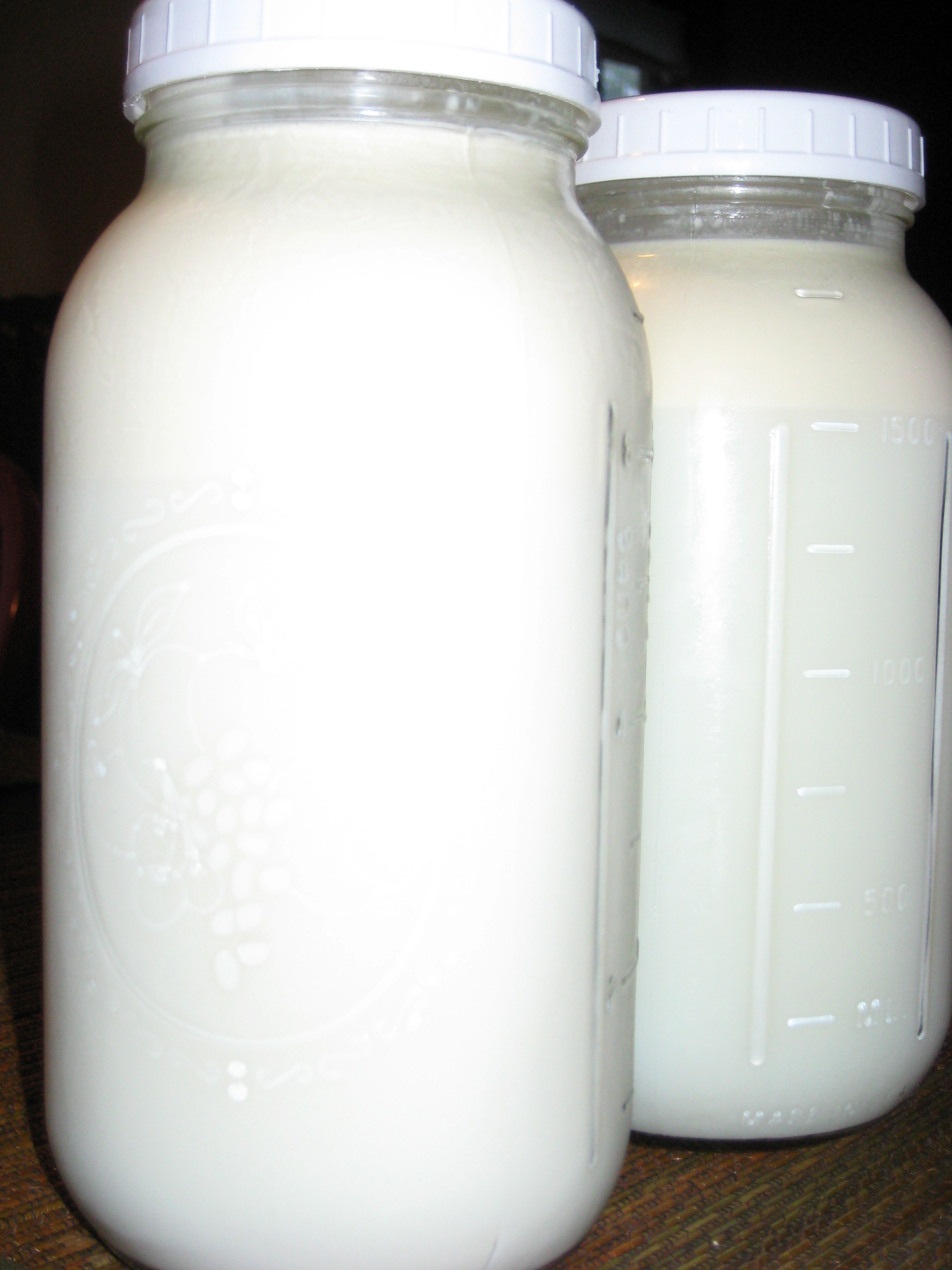
Dave and I have been getting some raw milk. Direct from farm, of course. It is illegal for farmers to sell raw milk off of the farm that produced it. It is also illegal to advertise it, so I think I have to be careful here. Can just writing about it on a blog constitute advertisement? I don’t know.  I might seem paranoid, but you’d be surprised by the swiftness, and harshness, of prosecution if rules regarding raw milk aren’t closely followed. I’m not going to go into the trials and tribulations of the real dairy farmer right now, since it’s a topic that I am still researching. What I am going to do is write a little about how much raw milk rocks.

I am tempted to go into why dairy is actually good for us, overall. However, I am still learning about that, too. So, for now I’ll leave it to a simple comparison of pasteurized and raw dairy; since we obviously consume a ton of dairy in the U.S.. First, a lot of people who think that they are lactose intolerant are actually only intolerant of pasteurized milk. This is because the pasteurization process kills the enzymes that exist in milk that our bodies can use to help process it. People have varying levels of enzymes already in their guts (based on genetic predisposition). True lactose intolerance is the inability to produce the enzyme lactase . This is common in cultures that did not descend from dairy consumers (duh – makes perfect sense, doesn’t it?). People of northern European descent are more likely to produce lactase beyond childhood (everyone produces it as babies, since we need it to digest our own mothers’ breast milk) than those of southern European, African, or Asian descent.  A lot of people who do produce lactase  just don’t produce enough to handle pasteurized milk because it makes the body work so hard to digest it. Or, a lot of people that think that they are lactose intolerant are actually allergic to milk because of the difficulty of digesting pasteurized product. I’m an example of this myself – pasteurized milk causes stomach and sinus problems for me. Raw milk does not. We’ve tried this out on a couple “lactose intolerant” friends, neither of whom reported any problems.

The second awesome thing about raw milk is how quickly the body absorbs the nutrients in it. It is insane. Dave and I joke about how it’s an elixir. But it’s really no joke. I tend to be calcium deficient, which can lead to muscle spasms as well as cramping. When we first started buying raw milk, I could drink a glass of raw milk when these symptoms set in, and they would literally go away within minutes. It is insane! Since I’ve been drinking it regularly, my problems have disappeared. I don’t take a calcium supplement, either. Pasteurization makes it harder for the body to absorb nutrients from the milk (again, because the heating process basically kills it; kind of like putting vegetables in the microwave kills a lot of the vitamins in them).

The third awesome thing is that, unless they are extremely ethically challenged, raw dairy farmers follow very stringent guidelines on the living conditions of their animals. The cows and their living environments need to be extremely clean and drug-free to guarantee the safety of the product without heating it. Furthermore, most farmers that care enough  not to take nutrients out of the milk, also care enough about the nutrients that are going into the milk. This  means that the cows are commonly pastured for as long as they can be, and are fed organic straw in the winter. The cows that my milk comes from are treated like pets. They have names. They are handled gently. And when new calves are born the farmer sends out birth announcements like a proud mama! It feels good to be guaranteed cruelty-free product.

Finally, it’s just delicious. Plain and simple. Which is why people have such a hard time giving up dairy (ahem, for those of us that have tried to be vegan!) in the first place!= )

The Value of Values

On Sunday,what seemed impossible for so long actually happened. Dave and I sat down and tackled a big chunk of this financial planning book that was given to us for our wedding (ya know – almost 3 years ago). It is called Smart Couples Finish Rich, by David Bach, and it comes highly recommended by a friend of mine who likes, and is good at, all this financial planning stuff (that I hate). But, actually, I didn’t hate this part. It was kind of fun and enlightening.

I actually tackled one of the first tasks in the book right after our wedding. I set up a filing system for all our important financial documents. That assignment was not fun. We had papers stuffed in boxes and all over the place. Mail that was years old that hadn’t been opened. That kind of thing. We were pretty deeply entrenched in avoiding our financial situation. Since that time we have become much better about facing up to the facts of our situation (ie., the decision to live with my parents while Dave was in school, instead of taking out more student loans; we actually have a cash flow sheet; etc.). However, we have still struggled to get the two of us on the same page in terms of our spending or our money goals. Therefore we have had totally divergent spending habits and understandings of where we’re trying to go, and have not been making a lot of headway for the future. I think that on Sunday, we might of taken care of that problem once and for all.

In the book, Bach has an exercise to help couples figure out what their top five values are in life, as a framework for what we should actually be using money for. After doing the exercise, Dave and I wound up with exactly the same values (I wonder how common that is? I’m grateful that it’s true for us – I think it will make things a lot easier!). Our values are:

  1. Freedom: not be chained from following our bliss due to financial obligations.
  2. Family: not have money worries place strain on our marriage, plan for our future children.
  3. Home: have a suitable place to live.
  4. Health: self-explanatory
  5. Work/Purpose: note that we don’t say “career” here. Neither of us is interested in climbing any ladders. Dave is interested in being a healer; I’m interested in being a writer. Therefore: work.

I think that these values, and having a visual reminder of them (we made them into drawings called “value circles,” per the book’s instructions), should help guide our spending. I hope so, anyhow!

After the values were set, we went on to make 5 goals each, related to our values, that we are going to focus on this year. I’m not going to share all of them here, but 2 of our goals ended up being the same, too. We both want to pay off our credit debt (currently sitting at $9,000 between the 2 of us – which, from what I hear, isn’t terrible. But it’s definitely not fantastic either) and build a decent savings account. To do that, we are going to have to figure out how to cut our expenses and try to increase our income this year. It’s an adventure!

Overall, I am feeling a lot better about all the financial stuff than I was before. Now that we’ve started really talking about the roots of our finances, I think that we’ll be able to stick to a plan better. Also, it was kind of fun and dreamy to talk about how we want our life to go, and why. Neither of us cares about being rich, or having a lot of stuff. We just want to be happy; and this exercise brought that back home.

The next step:  carry around a notebook and write down everything we spend for the next 7 days, and on what. That should be interesting (I’m a little scared)!

My Family and The Great American Roadtrip

Around this time of year, when it is beginning to warm up enough outside so that one doesn’t need to be so vigilant about skin coverage, but it’s not quite warm enough to declare spring, I begin to plot out all of the ways in which I will enjoy the imminent warm weather. Traditionally, this has included a summer vacation. This year some dear friends of mine are getting married in Los Angeles in December, so we are forgoing our summer vacation in order to save our pennies for the big event. In the absence of a vacation to plan, I am instead reminiscing about vacations past to get me through my March .

When I was growing up, my family never took winter vacations. We didn’t ski, and we couldn’t afford the high prices of escapes to Florida or Mexico. Furthermore, my mother was violently opposed to letting us miss school for any reason other than deathly illness. Therefore, all of the vacation energy for an entire year was focused on the summer road trip. My family (Me, Mom, Dad, my Bro, Uncle Pete, and sometimes Cousin Chris) drove all over the middle and western parts of this country (my dad typically refuses to go farther east than Michigan. Except for when we went to Disneyworld when I was 15. He is not a fan of cities, and therefore is not charmed by the idea of the East Coast). These trips consisted of a conversion van, lots of camping gear, a ton of snacks, and hours of staring out the window. We drove to the Black Hills, through the Rockies (hitting Devil’s Tower, Yellowstone, Jackson Hole, and a good chunk of the National Parks), Mackinaw Island, The Porcupine Mountains, Wisconsin Dells (that was an early one when I was about 7), and Florida (that was a crazy drive in August – it stormed the whole drive down!).

When I was 13 we broke precedence and got on a plane. We flew into Reno; where we, naturally, rented a conversion van and began the road trip! We drove to Lake Tahoe, all the way to San Francisco, and up the Big Sur. We saw the massive Redwoods, and the petrified forest. We saw the ocean; the first time for my brother and I. When we had seen all we wanted to see of California, we headed back to Reno to fly out. The trip was notable not only for the number of first sights seen, or for the fact of flying, but also because we stayed in roadside motels (some scary, some not). The last night in Reno was spent at the MGM Grand; all of it’s movie-set kitsch was particularly thrilling for us kids, who, despite our “well-traveled” status, had rarely been exposed to tourist traps.

The last family vacation I went on was when I was 20. It was July, exactly one week before my 21st Birthday. Of all places, we went to Vegas. Uncle Pete did not join us for this one. None of my family really gambles, and my brother and I weren’t old enough to drink. Dad isn’t so much into the shows. My brother and I went to a waterpark one day; we wandered down the strip and stared at everything another day. But, overall none of us was really into the whole Vegas thing. It’s just not really our speed. So, what did we do? We rented a car and drove to see the Hoover Dam and the Grand Canyon. Yee Haw! I wish we would have done that right away. It was one of the most amazing experiences I have ever had to stand on the edge of that cliff. Another notable thing about this trip was that my entire family had a near-death experience at the same time. The plane that we were on was one of the little tin-can charter flights that were so popular at the time. These little planes are what made it so cheap to get to Vegas. However, they are terrifying in a storm. We flew through a raging storm on the way home, that caused the lights to flicker in the cabin, and the plane to pitch about. Have I ever mentioned that I am a terrible flyer? I’m pretty sure I prayed most of the way home…

Moving on! David and I have continued the tradition of big road trips. The biggest one we’ve taken was during our second summer together. It was a 2-week road trip that included the Smokey Mountains, a three day stop at Bonnaroo music festival in Tennessee, and roaming through the Ozarks in Arkansas. That trip is so packed with notable events that I can barely pick which ones to share! This is probably the favorite: when driving out of Memphis, and into Arkansas, we saw a store that was called “Last Chance Liquor.” We thought it was a clever name. As it turns out, most of Arkansas is dry. Now, Dave and I can get by just fine without drinking, thankyouverymuch. But we were on vacation, and we were camping. We just wanted to go out for dinner and drinks once in this whole crazy adventure. After almost a week of winding our way through the Ozarks, with much of that time spent looking for fire wood so we could cook and have campfires (we got a whole lot of “fire wood? What do you need fire wood for? It’s summer!”), we had just about had it. We wanted to relax and have a decent date night. We got a wild hair and ended up driving all the way up to Branson, Missouri, and picking up some beer from a place that, literally, had a giant, waving, neon cowboy on top of it. Then we didn’t want to drive back down to our tent (in Arkansas), so we decided to get a hotel room and go out for dinner. Unfortunately, there was a convention in Branson that weekend and every last decent hotel was booked. It took us hours to find a place to stay. That is how we ended up at Maude’s. MAUDE’S!!! The whole building was Pepto-Bismol pink, and the rooms were decorated like potpourri satchels. With vibrating beds. I cried when I saw our room. By then it was too late to go out for dinner, so we ordered pizza, and drank our cans of cheap beer. And I cried a little more. Romantical, right?

Ah, the great American road-trip. Producer of crazy stories for the whole of my lifetime. Most likely the producer of more crazy stories in the future. I can hardly wait!

The Old American Dream

Related to last Thursday’s post, I am aware of the source of some of the anxiety that I’ve been having about this move. It is rooted in choosing to live in a way that is different from the way that I was raised to live. I was raised in the suburbs. I have one brother. My parents worked opposite shifts so we never had to go to daycare. We certainly didn’t have a lot of money as a family unit, but I always had my own bedroom, even when we lived in a trailer. We went to Catholic grade school. We went on annual vacations (even if it was just camping most of the time!). We had plenty of toys. Plenty of stuff. We had very little awareness of what a struggle it was for our parents to provide all of this to us. In our minds we weren’t spoiled. We were just “normal.” Now I look back at what my parents sacrificed for us (They never had new clothes. They always drove crappy cars. They never got to get away alone together. Etc.), with a mixture of awe, gratitude, and horror.

At the time, mom and dad were just doing what they felt they were supposed to do. Get married. Have kids. Buy a house. Accumulate stuff; mainly for the benefit of their children. They were raised under the idea that their role as parents was to provide a better life for their children than the one they had themselves (even if it meant going into debt to do it). The American Dream. I still think that this ideal rings true; I think that most young parents still want to create the best life possible for their children. I hope so, anyhow! I just think that “a better life” is in the process of being redefined. The idea of “the good life” in American culture is very stuff-centric. There are prescribed steps that, when followed, are supposed to lead to success. Success is a nicely decorated house on a big lot, with lots of fancy appliances and electronics, new cars every couple of years, vacations, etc. In my parents’ generation, and for a couple generations before and after theirs, everyone strove for an approximation of this image of success.

My generation may have been the last where the majority of us were raised in some approximation of the American Dream. The middle class. We were raised to believe that the culture of stuff is normal, and even necessary. Now the middle class is disappearing. There are the rich (we’re talking Oprah and the like, here), the wealthy (aka, anyone that can afford to live the way that my generation was raised to live), the poor (what used to be blue-collar middle class), and the very poor (those that can barely afford, or can’t afford, basic needs like food, shelter, etc.). My friends and I represent the new middle class. Educated, but without any of the money or stuff that has historically been associated with being educated. We simply can’t afford it – our incomes are not commensurate with our education, or with the amount of educational debt we carry.

Roughly 90% of people I know in my age group (I’m thinking of a group of about 100 friends and acquaintances) went to college. A good chunk have advanced degrees as well. The majority of us are married or permanently coupled. At age 30-35, only around 5% own their own homes. Almost everyone I know still rents. We all buy our clothes at discount stores. Some of us have some fancy electronics, etc., but they are in apartments or very modest homes. Many of us are thinking about starting families, but are worried that we can’t afford it, particularly when we are so mired down with student loans, and aren’t yet making enough money to comfortably pay on them, live life, and support children. For us, the old American Dream just simply isn’t really available.

What I think, what I hope, is happening, is that many people, particularly in my generation, are readjusting their ideals for “the good life” to look a little less like their parents’ ideals, and a little more like their grandparents,’ or great-grandparents’ ideals. To be happy, we don’t need a lot of stuff. We can’t require a lot of stuff for happiness, or happiness would literally be impossible. We can still have families. We can still experience life. We just can’t do those things AND own a lot of crap. For many of us, it has to be a choice. I think that for those of us that are on the cusp of this change in ideals, the transition can be emotionally difficult. It has been for me, anyhow. It is difficult to be raised in one value system and to then adjust to another value system. Pieces of the old value system still come back to haunt you, as unreasonable as they may be. My old value system comes back and whispers in my ear that, even though I make a relatively decent living and don’t hate my job, I’m not as successful as I should be.

The reality is that I simply can’t afford to live the same way that my parents did, and neither can most of my peers, despite the fact that I took full advantage of all of the opportunities that they gave me; I took all the right steps. That reality feels a little bit backwards, and my emotions rebel against it (as do those of my parents). But the truth is that I know that the way that my parents ‘ generation, and the generations around theirs, lived has caused massive destruction on this planet, and in the health and well-being of billions of humans. I don’t really even want to live that way. The simple truth is: of course I can live in a small space and still raise a child well. Of course I can be happy and experience life in that same small space. Of course I can get by with fewer outfits. Of course I don’t need every updated gadget that appears on the market. Of course I don’t need to buy my children gobs of toys. Of course I don’t need to eat out all the time. And so on, and so on, and so on. My grandmother did it. Her mother did it. Everyone turned out just fine. Everyone turning out fine and happy is the true mark of success. Not stuff. My family and I will be just fine, too.

The Great Apartment Search of 2010

This is only week 2 of earnest apartment searching, and I am already fatigued! I feel like the hunt is consuming my life at the moment. I guess that I have always really lucked out when searching for apartments. I’ve never had to look for more than a week before I found exactly what I was looking for. Of course, I’ve never looked for an apartment during February in Minnesota (aka, “coldest month of the year,” aka, “no, seriously, if you move right now your face and hands will freeze off before you get the first box in the door”). People don’t move in Minnesota during February. That means that there is not as much stuff available as there will be in April. Although, most landlords require 60 days notice from tenants prior to their move-out dates. Which means that I’m not totally out of my mind looking for an apartment now when I want to move by April 1 (which is still kind of chilly, but certainly isn’t the dead of winter!).

So far we have only physically looked at four apartments. The first one was a bad apartment in a good neighborhood. The second one was a great apartment in a bad neighborhood. The third one was a near-perfect apartment in a borderline neighborhood, and the fourth one was a really great apartment in really bad neighborhood. *Sigh* So, really we have only spent a grand total of about three hours actually running around and looking. The extremely time consuming part is trying to find places to look at. Scouring craigslist and other rental sites like a crazy woman. Calling and emailing prospective landlords. Trying to keep them all straight so I know which ones I’ve already called. Looking at various properties on Google maps to rule out any that are obviously in neighborhoods we don’t want to live in. It takes a lot of time and head-space.

The lack of desirable properties in our price range also makes me wonder if we need to lower our expectations. Maybe we can’t really afford a 2-bedroom, that allows dogs, in a decent neighborhood. Or, maybe we are carrying around incorrect perceptions of what constitutes a descent neighborhood. On that front, I have set out to create a crime report that compares the number and types of crime, per capita, in each neighborhood. I want to know what neighborhoods are actually “good” or “bad.” I’m also comparing it with crime, per capita, in each of the south suburbs. My aim in doing so is to settle a long-standing argument with my dad that his idea of safe (ie., suburbs only) isn’t actually any safer than where we choose to live. Reports?! How nerdy is that?! Apparently, though I’ve never been a numbers person, working in a stats department is having some kind of effect on my brain!

Another angle is that maybe we really can afford more, but don’t want to. We’re really not ready to think about buying a house. But, another part of me feels pain at the idea of paying the same amount as a mortgage in rent each month. Maybe I just have to tell myself that Minneapolis property tax is notoriously high, and that I don’t have to pay for (or complete) any repairs or maintenance as a renter. Maybe that will make it seem more worth the cost.

Anyhow, in the off chance that anyone who reads this knows of an apartment that might fit our profile, here it is: 2 bedrooms, dog friendly, decent-sized kitchen, a yard (communal outdoor space is totally fine!). Neighborhoods currently up for consideration are in South Minneapolis, preferably on the east side of 35W (but not necessarily). If you have any suggestions, please shoot me an email at: dharmabum35@hotmail.com!

Making Raw Candy

Typically I will write about food shopping on Mondays. However, I didn’t do the grocery shopping this week; my husband did. This is not a typical scenario. He hates grocery shopping (we split household chores based on who likes to do what. Luckily, there’s not a lot of overlap!). Anyhow, I suppose that I could just write about his shopping experience. But I really think that if I got a pass this week, I should just take it! Besides, this post is still food-related!

Dave and I attended a candy-making class at the Traditional Food Warehouse on the Thursday before Valentine’s day (yep, I’m a little behind on posting about this!). The class was taught by Dave’s sister Sheri, who, as I’m sure I’ve mentioned before, is the goddess of mind-blowing healthy desserts. It was framed around creating a gift for one’s valentine. Of course, I was there with my valentine, so he and I just made our candy to our own liking (how romantical, right?! This is what starts to happen after 7 years of togetherness!). It made for a fun date night, regardless, as we listened to music, sampled different flavor combinations with cacao, and drank wine while learning about, and learning to make, raw fudge.

I’m not going to go into great detail regarding the content of the class, as I recommend that anyone interested should check out one of Sheri’s classes in person. I will say that the basic premise of the class is that raw cacao (uncooked ground cocoa beans), and the other ingredients in the fudge, are health foods. This fudge contains no oil and no sugar; raw honey is the only sweetener.

Pasture butter is used instead of oil or corn syrup:

Here’s some of the class pounding the clumps out of their raw cacao (that’s Dave in the foreground, of course, and the guy next to him is my uncle Pete!).

Here’s my brother-in-law and his girlfriend creaming the butter:

Raw Cacao is a controversial amongst health-foodies. Some nutritionists list it as a superfood. When uncooked our bodies are able to derive a buffet of nutrients from the cacao, including much-needed enzymes and anti-oxidants. However, some still argue that cacao is toxic. Toxicity is doubtless when cacao is added to sugar or corn syrup and hydrogenated oils to make the candy bars found in standard grocery stores. I tend to doubt that raw cacao sweetened with honey is anything but good for us (in moderation, of course!) – especially since it has been used medicinally since ancient times! Here’s the raw powder :

We could choose from a variety of spices to add (Sheri measured them out for us – I chose cinnamon!):

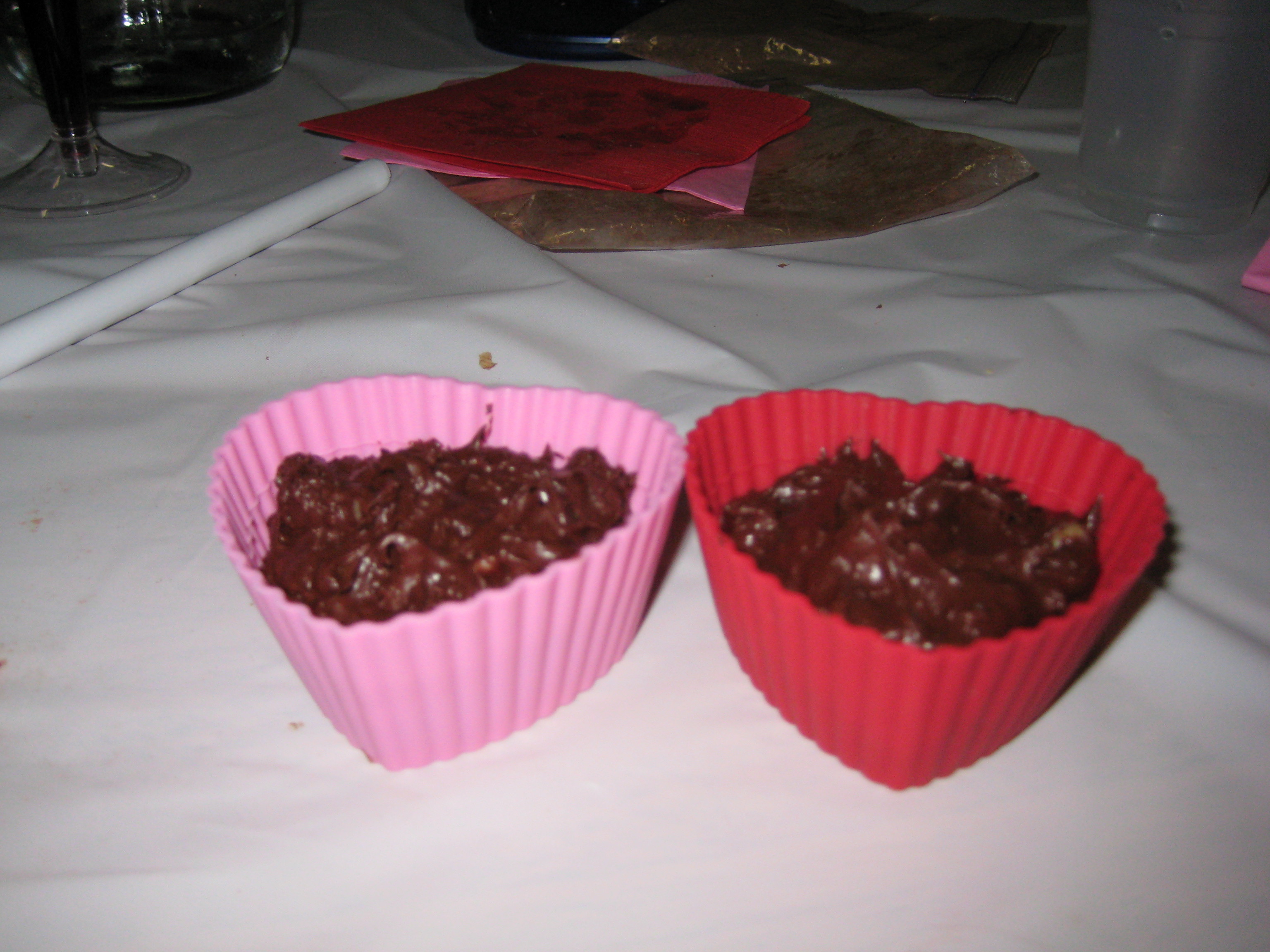
When we were done mixing up all the ingredients, we spooned them into these heart shaped candy molds (I also added walnuts to mine):

The two pieces of candy above may not look big, but in terms of how rich this fudge is, they are enormous! Between Dave and I we had four, and there are still 2 1/4 sitting in our fridge. They are so good, but not in the addictive, crack-y way a Hershey bar is good. The raw fudge, unlike commercial chocolate, tastes really good. You eat one bite, and are satisfied. It doesn’t impart what Dave and I call the “shovel reflex.” Anyone who has ever eaten half a bag of Hershey’s kisses without realizing it knows what that means! It’s the impulse to keep eating that sugar signals.

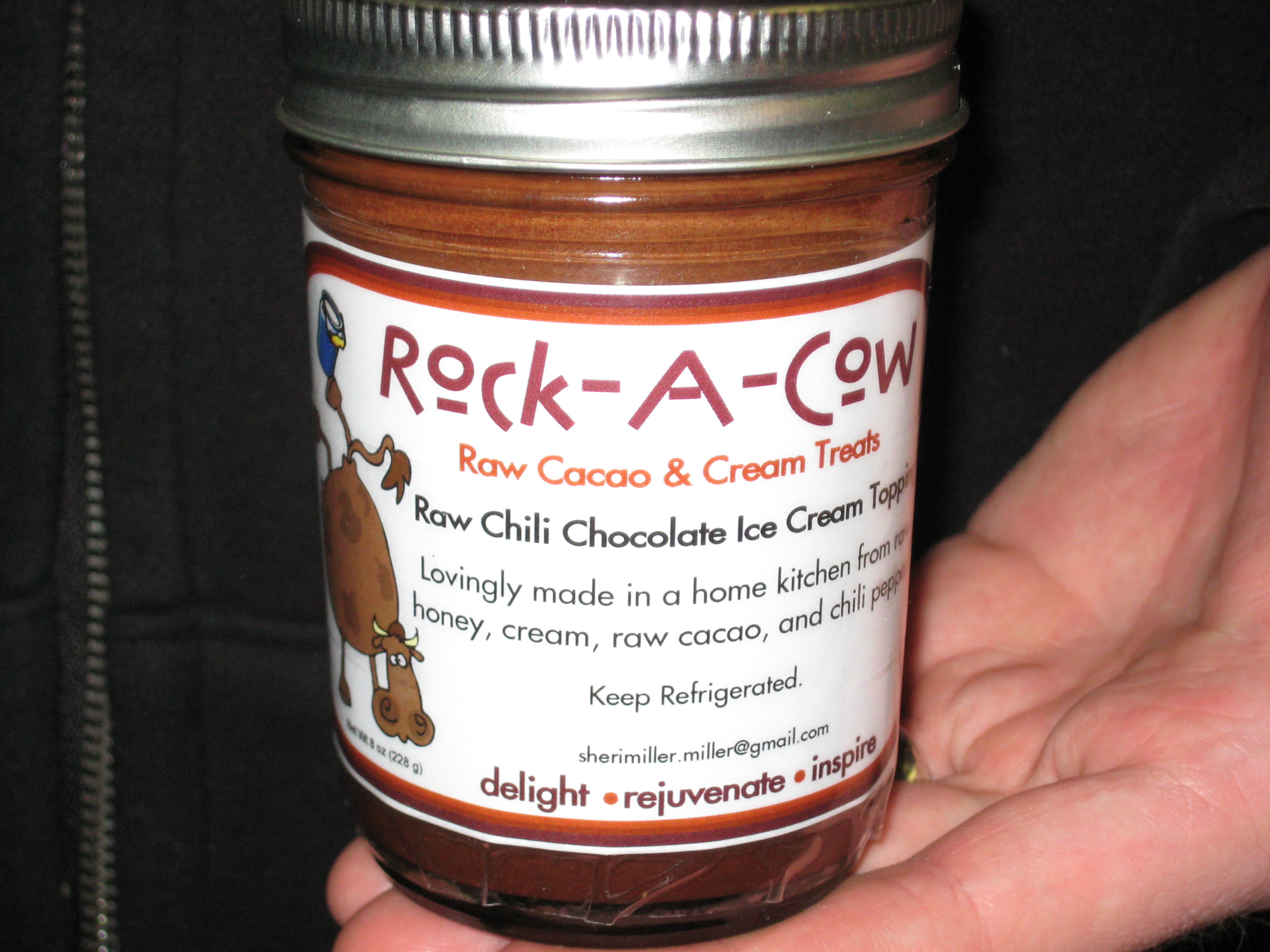
Sherri has started a product line of raw cacao ice cream toppings called “Rock-a-Cow” (get it? raw cacao = rock a cow!):

If you are interested in trying some of this delicious dessert topping, or in taking one of Sheri’s healthy dessert classes, she can be reached at sherimiller.miller@gmail.com!

Do Clothes Matter? More Adventures with Body Dismorphia

My husband got a job! Woohoo! (this will be the supplement to his own massage practice). He had a bunch of interviews last week, which means that we had to go shopping on Monday night to get him an interview outfit. It ended up being more of a shopping extravaganza than we expected. My husband very, very rarely shops for clothes. He would like to do it more often, but when it comes down to spending money on clothing or on other things, he will always choose other things. This means that he often lets clothing disintegrate way too much before replacing it. Hence, he was, until Monday night, at a place where almost everything he owned was completely worn and tattered. We ended up getting him 3 shirts, a hoodie, a pair of shoes, and a wool coat. He walked out of the store like he had a new lease on life. After his first interview he told me that for once when he walked into an office, everyone there seemed to respect him. He felt that it had a lot to do with being dressed nicely (I suspect it also had to do with him being a professional in the field that is practiced in that particular office!).

We both need further wardrobe infusion; and we have set aside a bit of our tax return for that purpose. Despite the fact that this runs counter to our attitude throughout our 20’s; at this point in time Dave and I are both convinced that clothing does matter. Both of us have observed enough at this point to have noticed the difference in people’s attitudes towards us when we are dressed nicely. Is it shallow that human beings base so much on physical presentation? Probably. It shouldn’t matter. Can we help our snap judgments based on personal presentation?  Maybe. But I’m leaning towards “no.” Not without some consciousness training. Our brains are wired to pick out traits that denote health and social dominance. In our society, those traits aren’t always inherent to our bodies or minds. They are  often purely ornamental.

I spent most of my 20’s stubbornly refusing to acknowledge that “business casual” is an acceptable requirement for work. My attitude was based on 2 things: 1. clothes don’t actually hold any bearing over a person’s performance of their job, 2. business clothes are expensive, and few people make enough money in their 20’s to afford work clothes AND casual clothes. I still think that both items are true. However, I now know how it can hold a person back in their career to show up to work looking less-than-polished. People will judge you; whether they mean to or not.

The paradoxical thing about my attitude at the time is that I did actually really like clothes. I had a personal style, it was just much more casual than what was appropriate for work. So, I did actually care about my appearance. Just not at the office. I like clothes because of personal expression. Dressing oneself can be a pretty creative act. It can be a lot of fun, and can have a  profound effect on they way we see ourselves. I still love looking at clothes…on other people, that is. I fear that I have lost any zeal for actually dressing myself.

Sometime around the age of 23 I recall having a conversation with a friend that included the phrase: “please don’t ever let me go out in public wearing sweats.” Fast forward 7 years, to my frequent uniform: yoga pants and a tee-shirt. This decade’s sweats equivalent. Furthermore, most of my work clothes are ill-fitting and/or really old. Most of my casual outfits consist of jeans, a tee-shirt, a hoodie, and tennis shoes. When I have to go out for social events I panic about what I’m going to wear. I know that I would feel a lot better about myself if I liked what I was wearing. Sadly, I have realized that I have lost most of the sense of personal style that I once had.

Shopping now is kind of a wilderness experience for me. I feel lost. I feel uninspired. I feel frustrated. I have had very little luck during recent shopping trips. I just haven’t been able to find anything that I like that also looks decent on me. Part of me feels like the problem is that I have never adjusted my personal style to the change in my body size. I still like clothing that really only looks good on women who are smaller than I am. This could be somewhat true. There are some things that are exclusively for the size 8 and under. However, I often see outfits on women who are my size, or larger, that look really cute, and would totally fit under the category of “things I like.” This leads me to suspect that part of the problem is that, once again, I am not seeing what is really there when I look in the mirror.

So, what do I do? I guess that I’m just going to have to take what I know intellectually about shapes and colors that flatter me (the “shapes” bit is mostly stuff that I’ve picked up from What Not to Wear. Hey, it’s instructional!). And buy things based on actual fit instead of on what I see. This could be kind of tricky! But I’m going to have to go for it.

What do you have a personal philosophy on clothing? Do you think it matters?