Tag Archives: Health

Raw Milk Awesomeness

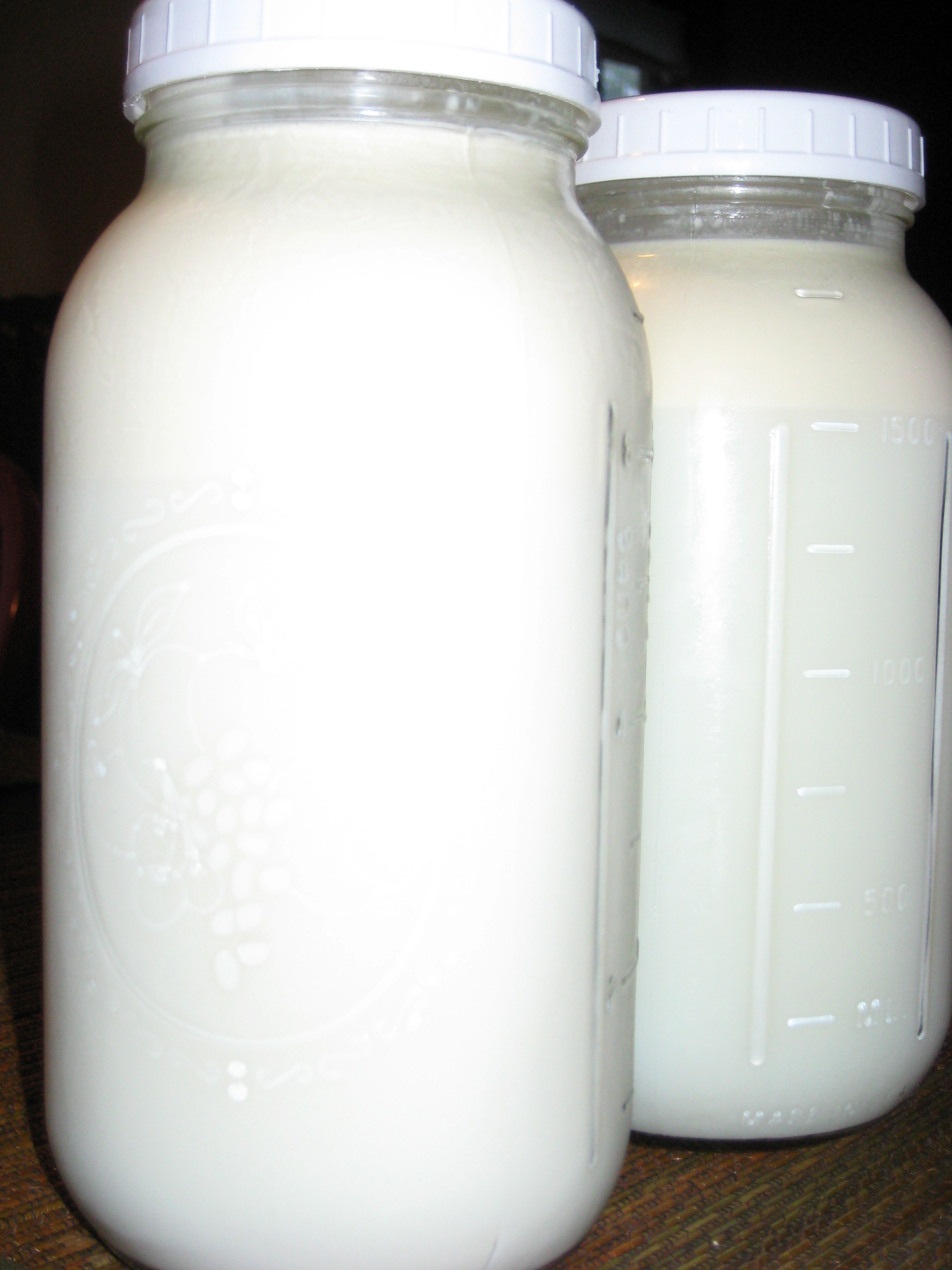
Dave and I have been getting some raw milk. Direct from farm, of course. It is illegal for farmers to sell raw milk off of the farm that produced it. It is also illegal to advertise it, so I think I have to be careful here. Can just writing about it on a blog constitute advertisement? I don’t know.  I might seem paranoid, but you’d be surprised by the swiftness, and harshness, of prosecution if rules regarding raw milk aren’t closely followed. I’m not going to go into the trials and tribulations of the real dairy farmer right now, since it’s a topic that I am still researching. What I am going to do is write a little about how much raw milk rocks.

I am tempted to go into why dairy is actually good for us, overall. However, I am still learning about that, too. So, for now I’ll leave it to a simple comparison of pasteurized and raw dairy; since we obviously consume a ton of dairy in the U.S.. First, a lot of people who think that they are lactose intolerant are actually only intolerant of pasteurized milk. This is because the pasteurization process kills the enzymes that exist in milk that our bodies can use to help process it. People have varying levels of enzymes already in their guts (based on genetic predisposition). True lactose intolerance is the inability to produce the enzyme lactase . This is common in cultures that did not descend from dairy consumers (duh – makes perfect sense, doesn’t it?). People of northern European descent are more likely to produce lactase beyond childhood (everyone produces it as babies, since we need it to digest our own mothers’ breast milk) than those of southern European, African, or Asian descent.  A lot of people who do produce lactase  just don’t produce enough to handle pasteurized milk because it makes the body work so hard to digest it. Or, a lot of people that think that they are lactose intolerant are actually allergic to milk because of the difficulty of digesting pasteurized product. I’m an example of this myself – pasteurized milk causes stomach and sinus problems for me. Raw milk does not. We’ve tried this out on a couple “lactose intolerant” friends, neither of whom reported any problems.

The second awesome thing about raw milk is how quickly the body absorbs the nutrients in it. It is insane. Dave and I joke about how it’s an elixir. But it’s really no joke. I tend to be calcium deficient, which can lead to muscle spasms as well as cramping. When we first started buying raw milk, I could drink a glass of raw milk when these symptoms set in, and they would literally go away within minutes. It is insane! Since I’ve been drinking it regularly, my problems have disappeared. I don’t take a calcium supplement, either. Pasteurization makes it harder for the body to absorb nutrients from the milk (again, because the heating process basically kills it; kind of like putting vegetables in the microwave kills a lot of the vitamins in them).

The third awesome thing is that, unless they are extremely ethically challenged, raw dairy farmers follow very stringent guidelines on the living conditions of their animals. The cows and their living environments need to be extremely clean and drug-free to guarantee the safety of the product without heating it. Furthermore, most farmers that care enough  not to take nutrients out of the milk, also care enough about the nutrients that are going into the milk. This  means that the cows are commonly pastured for as long as they can be, and are fed organic straw in the winter. The cows that my milk comes from are treated like pets. They have names. They are handled gently. And when new calves are born the farmer sends out birth announcements like a proud mama! It feels good to be guaranteed cruelty-free product.

Finally, it’s just delicious. Plain and simple. Which is why people have such a hard time giving up dairy (ahem, for those of us that have tried to be vegan!) in the first place!= )

Making Raw Candy

Typically I will write about food shopping on Mondays. However, I didn’t do the grocery shopping this week; my husband did. This is not a typical scenario. He hates grocery shopping (we split household chores based on who likes to do what. Luckily, there’s not a lot of overlap!). Anyhow, I suppose that I could just write about his shopping experience. But I really think that if I got a pass this week, I should just take it! Besides, this post is still food-related!

Dave and I attended a candy-making class at the Traditional Food Warehouse on the Thursday before Valentine’s day (yep, I’m a little behind on posting about this!). The class was taught by Dave’s sister Sheri, who, as I’m sure I’ve mentioned before, is the goddess of mind-blowing healthy desserts. It was framed around creating a gift for one’s valentine. Of course, I was there with my valentine, so he and I just made our candy to our own liking (how romantical, right?! This is what starts to happen after 7 years of togetherness!). It made for a fun date night, regardless, as we listened to music, sampled different flavor combinations with cacao, and drank wine while learning about, and learning to make, raw fudge.

I’m not going to go into great detail regarding the content of the class, as I recommend that anyone interested should check out one of Sheri’s classes in person. I will say that the basic premise of the class is that raw cacao (uncooked ground cocoa beans), and the other ingredients in the fudge, are health foods. This fudge contains no oil and no sugar; raw honey is the only sweetener.

Pasture butter is used instead of oil or corn syrup:

Here’s some of the class pounding the clumps out of their raw cacao (that’s Dave in the foreground, of course, and the guy next to him is my uncle Pete!).

Here’s my brother-in-law and his girlfriend creaming the butter:

Raw Cacao is a controversial amongst health-foodies. Some nutritionists list it as a superfood. When uncooked our bodies are able to derive a buffet of nutrients from the cacao, including much-needed enzymes and anti-oxidants. However, some still argue that cacao is toxic. Toxicity is doubtless when cacao is added to sugar or corn syrup and hydrogenated oils to make the candy bars found in standard grocery stores. I tend to doubt that raw cacao sweetened with honey is anything but good for us (in moderation, of course!) – especially since it has been used medicinally since ancient times! Here’s the raw powder :

We could choose from a variety of spices to add (Sheri measured them out for us – I chose cinnamon!):

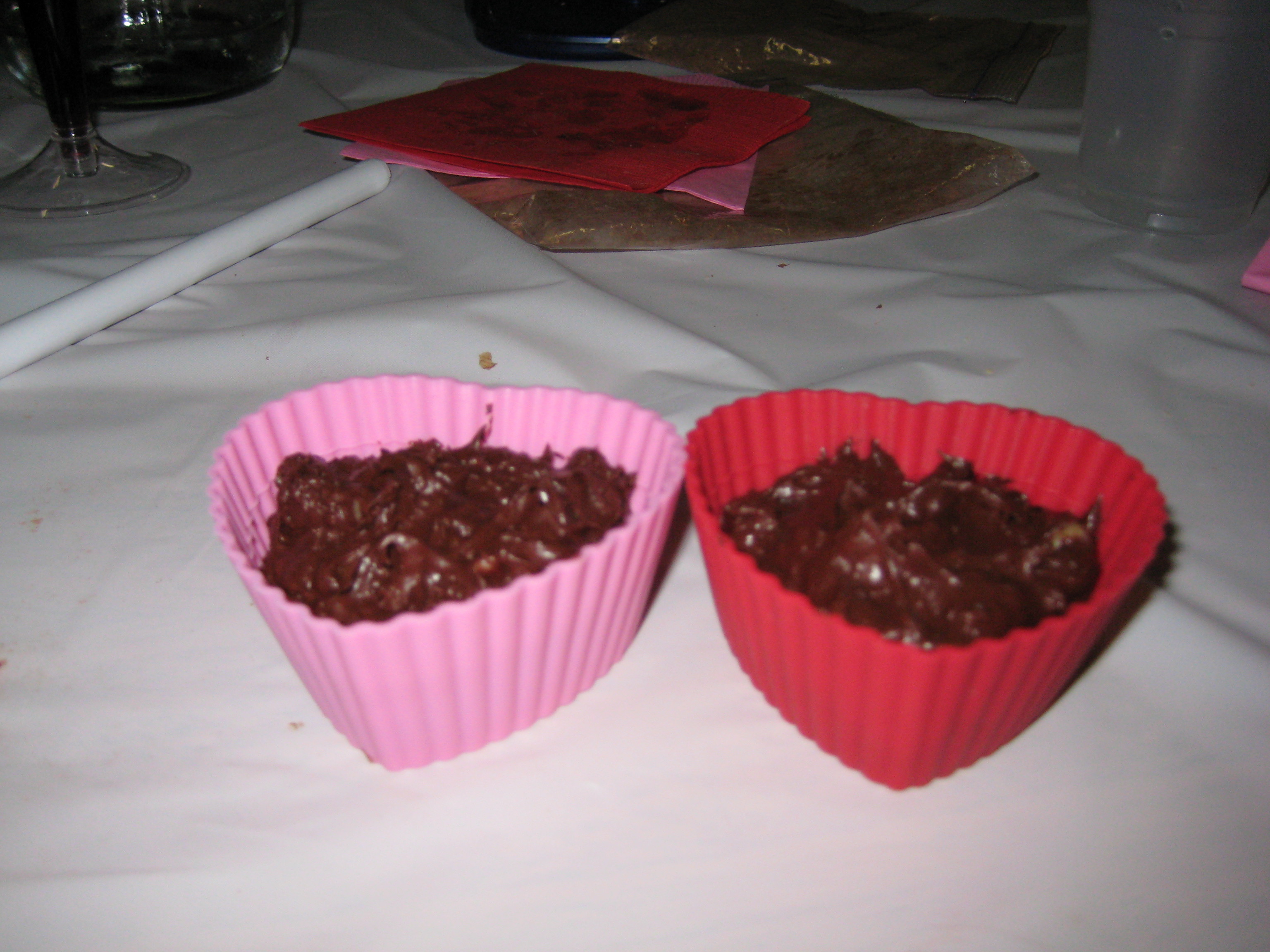
When we were done mixing up all the ingredients, we spooned them into these heart shaped candy molds (I also added walnuts to mine):

The two pieces of candy above may not look big, but in terms of how rich this fudge is, they are enormous! Between Dave and I we had four, and there are still 2 1/4 sitting in our fridge. They are so good, but not in the addictive, crack-y way a Hershey bar is good. The raw fudge, unlike commercial chocolate, tastes really good. You eat one bite, and are satisfied. It doesn’t impart what Dave and I call the “shovel reflex.” Anyone who has ever eaten half a bag of Hershey’s kisses without realizing it knows what that means! It’s the impulse to keep eating that sugar signals.

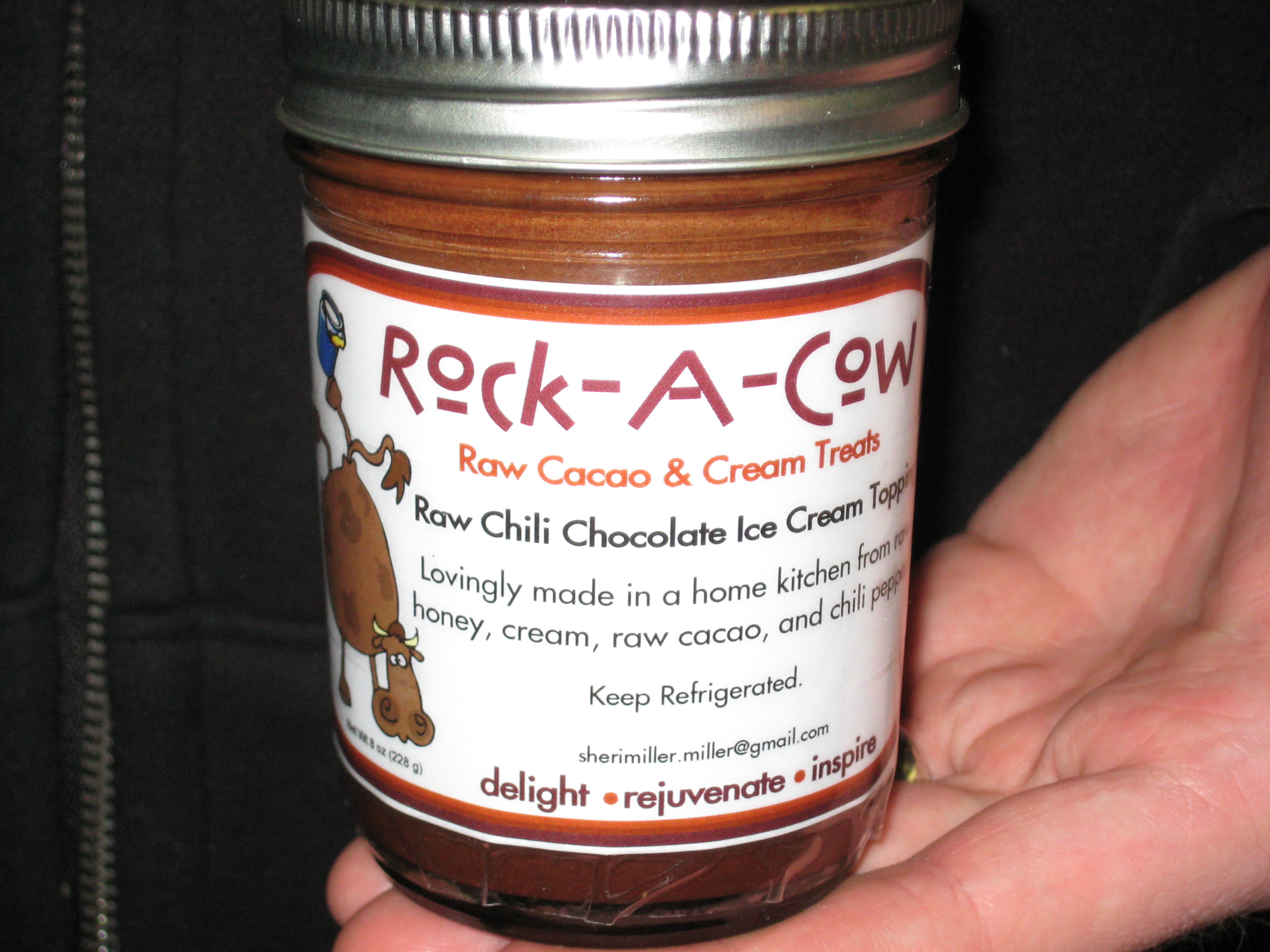
Sherri has started a product line of raw cacao ice cream toppings called “Rock-a-Cow” (get it? raw cacao = rock a cow!):

If you are interested in trying some of this delicious dessert topping, or in taking one of Sheri’s healthy dessert classes, she can be reached at sherimiller.miller@gmail.com!

Do Clothes Matter? More Adventures with Body Dismorphia

My husband got a job! Woohoo! (this will be the supplement to his own massage practice). He had a bunch of interviews last week, which means that we had to go shopping on Monday night to get him an interview outfit. It ended up being more of a shopping extravaganza than we expected. My husband very, very rarely shops for clothes. He would like to do it more often, but when it comes down to spending money on clothing or on other things, he will always choose other things. This means that he often lets clothing disintegrate way too much before replacing it. Hence, he was, until Monday night, at a place where almost everything he owned was completely worn and tattered. We ended up getting him 3 shirts, a hoodie, a pair of shoes, and a wool coat. He walked out of the store like he had a new lease on life. After his first interview he told me that for once when he walked into an office, everyone there seemed to respect him. He felt that it had a lot to do with being dressed nicely (I suspect it also had to do with him being a professional in the field that is practiced in that particular office!).

We both need further wardrobe infusion; and we have set aside a bit of our tax return for that purpose. Despite the fact that this runs counter to our attitude throughout our 20’s; at this point in time Dave and I are both convinced that clothing does matter. Both of us have observed enough at this point to have noticed the difference in people’s attitudes towards us when we are dressed nicely. Is it shallow that human beings base so much on physical presentation? Probably. It shouldn’t matter. Can we help our snap judgments based on personal presentation?  Maybe. But I’m leaning towards “no.” Not without some consciousness training. Our brains are wired to pick out traits that denote health and social dominance. In our society, those traits aren’t always inherent to our bodies or minds. They are  often purely ornamental.

I spent most of my 20’s stubbornly refusing to acknowledge that “business casual” is an acceptable requirement for work. My attitude was based on 2 things: 1. clothes don’t actually hold any bearing over a person’s performance of their job, 2. business clothes are expensive, and few people make enough money in their 20’s to afford work clothes AND casual clothes. I still think that both items are true. However, I now know how it can hold a person back in their career to show up to work looking less-than-polished. People will judge you; whether they mean to or not.

The paradoxical thing about my attitude at the time is that I did actually really like clothes. I had a personal style, it was just much more casual than what was appropriate for work. So, I did actually care about my appearance. Just not at the office. I like clothes because of personal expression. Dressing oneself can be a pretty creative act. It can be a lot of fun, and can have a  profound effect on they way we see ourselves. I still love looking at clothes…on other people, that is. I fear that I have lost any zeal for actually dressing myself.

Sometime around the age of 23 I recall having a conversation with a friend that included the phrase: “please don’t ever let me go out in public wearing sweats.” Fast forward 7 years, to my frequent uniform: yoga pants and a tee-shirt. This decade’s sweats equivalent. Furthermore, most of my work clothes are ill-fitting and/or really old. Most of my casual outfits consist of jeans, a tee-shirt, a hoodie, and tennis shoes. When I have to go out for social events I panic about what I’m going to wear. I know that I would feel a lot better about myself if I liked what I was wearing. Sadly, I have realized that I have lost most of the sense of personal style that I once had.

Shopping now is kind of a wilderness experience for me. I feel lost. I feel uninspired. I feel frustrated. I have had very little luck during recent shopping trips. I just haven’t been able to find anything that I like that also looks decent on me. Part of me feels like the problem is that I have never adjusted my personal style to the change in my body size. I still like clothing that really only looks good on women who are smaller than I am. This could be somewhat true. There are some things that are exclusively for the size 8 and under. However, I often see outfits on women who are my size, or larger, that look really cute, and would totally fit under the category of “things I like.” This leads me to suspect that part of the problem is that, once again, I am not seeing what is really there when I look in the mirror.

So, what do I do? I guess that I’m just going to have to take what I know intellectually about shapes and colors that flatter me (the “shapes” bit is mostly stuff that I’ve picked up from What Not to Wear. Hey, it’s instructional!). And buy things based on actual fit instead of on what I see. This could be kind of tricky! But I’m going to have to go for it.

What do you have a personal philosophy on clothing? Do you think it matters?

Food Philosophy Vs. Practice

In this post I wrote about how eating healthy is not that complicated. The overall point being that if a person eats actual food, and doesn’t eat an enormous amount of it, it’s pretty likely that he or she will be healthy. I am insanely tired of my own diet/food schizophrenia. I’m tired of thinking so hard about what I should or shouldn’t eat. I’m tired of all that thought being in vain when it becomes clear that whatever diet I’m on isn’t working, or when it conflicts with whatever the most recent nutritional science says. I’m tired of constantly starting new food routines. I just want to eat and be nourished and healthy. Period. Therefore, as part of my resolution to treat my body more respectfully, I intend to actually adopt the logical philosophy of Michael Pollan, “eat food, not too much, mostly plants.”

I sincerely hope that this will be my final change in food routine. Ever. This final change-up entails the following:

  1. More shopping and more cooking. I will be looking for the most “whole” food possible. If sustainably farmed animal products are not available, or if I don’t know where they came from, I will not be eating them. In that sense, I guess that I will still be primarily vegan (since good stuff is hard to find!). But, since I will eat any animal products under the right circumstances, I will not call myself vegan or vegetarian. I heard a new term last week that probably describes my eating habits better: “flexitarian.” Or, perhaps I just won’t term myself anything but “eater”! Anyhoo, veggies and grains will be organic and as local as possible (acknowledging, of course, that it is the dead of winter in MN right now!). As little as possible will be processed. If I want a particular dish, I’m going to try to make it entirely from scratch (it’s an adventure!).
  2. 3 squares per day, nothing between. I want to eat well-rounded meals 3 times/day, not in front of the T.V., ideally in the company of at least one other person. Acknowledging that breakfast and lunch will still most likely be consumed while sitting at my desk (I would still rather be able to go home earlier each day than take a break to eat!).

So, really, those 2 things – eat food, not too much – are kind of a lot of work in the context of the current American societal structure. When I said that eating healthy isn’t complicated, what I really meant is that it is not difficult to comprehend logically. I didn’t mean that it is easy in practice! I am personally curious about how much time this will take each week; how much work will it actually be? Also, is all the work really worth it? Therefore, I am going to add a new weekly feature to this blog. I’m going to call it “Weekly ‘Eat Food’ Wrap-up.” Here is what I plan to include in the feature:

  1. What I ate over the last week.
  2. How many hours I spent shopping.
  3. How many hours I spent cooking.
  4. Times that I went off the plan (used stuff that doesn’t technically fit).
  5. Results: Weight loss (I will also note how much I exercised as an added barometer for this), noticeable health improvements, any stuff I learn in the process about new sustainable products/where to buy them, etc.

I’m not saying that I plan to be “perfect”. In fact, I will straight up say that when it comes to eating with others at restaurants or in their homes, I will eat whatever’s put in front of me (minus the meat, in most cases) without complaint. I’m a pretty average girl, and I want to see how this goes for the average person. I know that this is kind of an exhibitionist thing to do, but I feel like it will add some motivation for me to keep on track with stated values, and it might help others who are curious about how hard it is to do this and are trying to decide whether or not it’s worth it!Anyhow, I’m going to try it and see how it goes.

What do you think?

Working it Out: Gym Hatred and Other Exercise Dramas

I have reached my first little weight loss plateau already. It came sooner than I expected; but once again, I am not 23 anymore, and can’t expect my metabolism to be the same as it was then! I’m doing pretty well on the vegan diet now, so I think it is time pump up the exercise.

I have mentioned here before that I was not a very active child growing up. In fact, exercise was connected to some of my worst childhood traumas. Ah yes, the classic childhood trauma of being the last picked for teams! As you might imagine, being terribly shy, overweight, and not particularly interested in sports did not make me a popular choice in gym class. To make matters worse, my gym teacher throughout all of grade-school (age 5-12) literally bullied me. She would do things like make me stay after class and keep hitting the goddamned volley ball over the net after everyone else had gone to change. She was constantly yelling at me (really yelling – private school teachers were still allowed to be abusive to a certain extent), calling me out and humiliating me in front of classmates – as if I really needed any more humiliation than I already got. She was not being supportive or pushing me to achieve, she was just a straight up evil bitch; and hypocritical too, considering that she had to be well over 200 lbs herself. I recently saw her walking into a restaurant in Savage (yes, she still teaches at the catholic grade school there, and if I heard correctly, might be the principal now. That ASTOUNDS me). This might be kind of extreme, but I told Dave that we were going somewhere else, because, now that I have some balls, I couldn’t be responsible for what I would say to her. My heart was racing, and I could feel the rage waiting to come out. Something along the lines of “Thanks for the bulimia, bitch. It truly hurts my heart that you are still allowed to influence children.” Sometimes its amazing how much people from your childhood can haunt you, and when you see them, it feels like your negative association with that person just happened yesterday.

Ahem, moving on. In short, I didn’t have very good beginnings when it came to exercise. I thought that I sucked at everything physical, which fed into my vicious cycle of unhealthiness. I didn’t exercise because I wasn’t aware that just because I happened to suck at team sports didn’t mean that I sucked at all physical activity. As I got older, I slowly began to discover independent physical activities that I love: hiking, skating, biking, snowshoeing, cross-country skiing, dance,Yoga, etc. I am actually really good at a lot of those things. Right now the problem is that many of those things are outdoor activities, and it gets dark out before I get home from work each day. I’m just not as fearless (read: stupid) as I was in my younger years, and can’t bring myself to get out on the trails, alone, in the dark. It just isn’t safe. Perhaps with my dog and a can of bear mace…

If I’m not going to work out outdoors in the winter, I will obviously have to workout indoors. I’ve got Yoga, but I need some kind of cardio as well. In the past I have taken care of this requirement by going to gyms. I always start out as a good gym member – going at least 4 times per week. But then, my ambition slowly peters out. The main explanation for my flagging motivation is that I HATE gyms. Really, I do. They’re so boring to me! I don’t lift weights. I don’t do aerobics (I don’t like being confined to the class schedules). I’m a bad swimmer (10 years of lessons as a kid, and my skill level is still at “I won’t drown if you throw me in water”). That leaves the cardio machines. Treadmills don’t make sense to me – I could just take a walk during my lunch break. Stairclimbers hurt my knees (also, I work on the 9th floor of a skyscraper – I regularly take the stairs for free). I do like the stationary bike. But my favorite is the elliptical machine. I adore the elliptical. However, one, maybe two, machines does not a gym member make. Two machines doesn’t make the membership fee worthwhile, and they certainly don’t make showing up at the gym worthwhile! So, no. I will not be a gym member any longer.

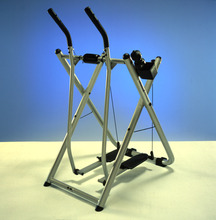
Instead, I turn to the poor-man’s elliptical. Instead, I present to you, the GAZELLE!:

It essentially does the same job as the elliptical; it’s just a lot more rickety. So far, what I like most about it is that it gives me an excuse to watch TV guilt free (well, the shows that I watch are still worthy of guilt. But at least I’m not sitting on the couch!)! Apparently bad TV creates motivation where wasting money on a gym membership could not!

If you live in a cold climate, what do you do for exercise during the winter? Do you like the gym? Or do you find alternative methods?

The Connection

gala

Abby, Shannon, and me at the Gala, 11/2009

Over the last week I have been thinking a lot about how connected all of my big goals are with each other. Good health, strong spirituality, wealth, and a satisfying career are nodes on the same loop.

Good health is biggie. We’ve all heard the phrase “you haven’t got anything if you haven’t got your health.” This is true on so many levels. The first level is obvious: if you are sick in any way, you are not able to function to your highest potential. If you are tired, can’t breathe, are in pain, can’t move properly, etc., it is going to make it all the harder to reach any goal you set out for yourself. Obviously, people overcome all kinds of physical obstacles to achieve their dreams; but at this point in time I feel like if I have any control over the obstacles, it’s best to just remove them. I have enough “issues” to get over without adding physical problems to the pile! The more energy I have, the more I can devote to spirituality, career development, and wealth.

The second level is that physical issues feed into the psychological issues. If you don’t feel good, it affects your brain chemistry and how you perceive the world; which then affects your behaviors, which affect how others perceive you. The perception of others can affect a lot of things – from your personal relationships to your career. It’s all a self-fulfilling loop. Feeling bad begets feeling bad.

The next level is that your health affects your appearance, which also affects the perception of others. Let’s face it, as much as we all want to say appearance doesn’t matter, it absolutely does. Despite our advanced self-awareness and cognitive ability, it’s my opinion (based on some stuff that I have read that I am too lazy to go find for reference!) that humans still have some holdovers from “survival of the fittest.” Above and beyond obvious conscious biases (ie., if you look like a supermodel or an olympic athlete, chances are that people might be “drawn” to you!), if you’re not healthy, there are a million little subconscious ways that other people are going to know it and be subconsciously biased towards you. I think that is some of the basis for “gut feelings” about people. If you have the opportunity to remove biases that others might have towards you, it is only going to be helpful in developing the relationships that a person needs for a successful career, etc. In other words, I think that health touches every part of our lives.

The next part of the “loop” is money. I don’t think that a lot of money is necessary for good health. But I do see where the more money a person has, the more they can afford to spend on maintaining their health, and they will definitely be less stressed out without debt nagging at them. Furthermore, there’s the old adage, “it takes money to make money,” you need to spend money on education and/or on other resources and supplies in order to gain a successful career that will earn more money. More money can also mean more free time- which can lead to more time for spiritual practice.

Next we have career development. Having a fulfilling career leads to a better sense of confidence and well-being, which contributes to good health in all kinds of ways – higher levels of endorphins, lower levels of stress, etc. People tend to be more successful at things they are passionate about. Success leads to wealth. I also believe that having a vocation, or doing what you are “supposed” to do for a living, can be part of a spiritual path.

Finally, there is spirituality. Like health, I feel that spirituality touches every single part of our lives. Part of it is that I believe that we are each active participants in creating our own realities. Every thought that we have has the potential to be a “prayer”- we are constantly asking the universe, or God, or whatever your preferred title, for what we want via our thoughts and intentions. If you think negatively about your health, money, or career, your experience is going to be negative. If you think positively your experience will be positive. I believe in this both psychologically and physically (I put weight on the whole theory that thoughts have physical bearing). The more energy I can devote to training myself to live with intention, and gratitude for the life that I have at any given moment, the better off I feel that I will be.

So really, the main point that I am trying to make is that having a lot of goals doesn’t need to be overwhelming, because if you are working hard on one of them, it is also going to make a gain in the others. Everything is a big web, and when you make positive changes in one area of life, all areas will be positively affected. Personally, I feel really good about focusing most of my energy on good health right now. It seems like a strong cornerstone. But it’s been a nice side-effect of that focus to begin noticing other, seemingly unrelated changes!

Personal Care Products or Pretty Poisons?

Recently I have been reading Big Green Purse by Diane MacEachern. It’s a book of advice on environmental advocacy via responsible consumerism. I didn’t read it cover to cover because a lot of the information in it is kind of second nature to me (and I hope most people!) at this point. For example: biking as opposed to purchasing fossil fuel (duh). One of the striking chapters for me was the one about personal care products. I guess that I was aware, on an intuitive level, that many personal care products are not good for the environment (or our bodies) because they often come in un-recycleable or unnecessary packaging, and contain chemical ingredients that are toxic in some way. However, I never really got into the specifics of what the toxins in so many of our personal care products actually do. I found this user-friendly list of common toxins in personal care products on Green-blog.org. It is pretty comparable to the list found in Big Green Purse. Once you get down to the nitty-gritty of what these toxins do to us (and to the animals and plant life that are affected by run-off from our showers), it’s pretty horrifying that manufacturers are allowed to use these ingredients at all.

MacEachern indicates in her book that there is very little government regulation over the ingredients in personal care products. To find out more, I checked out the U.S. Food and Drug Administration (FDA) website and found these clif notes to FDA Authority Over Cosmetics (the inclusion of other personal care products is implied). Basically, the FDA says that manufacturers are responsible for guaranteeing the safety of their own product and for providing consumers with a list of ingredients. The implication is that if consumers don’t want to absorb harmful toxins into their skin, they have to do their homework. Obviously manufacturers are typically more concerned with their bottom line than they are with the well-being of their consumers; therefore they are going to keep their definitions of “safety” pretty loose, and are going to make their labels as indecipherable as possible.

I am a general advocate of personal responsibility. I think that people should have the right, and the responsibility, to choose how to live their lives. I’m not big on government regulation. However, I think that if that’s the way we’re going to play it in this country, then there needs to be some guidelines around transparency. If we’re going to allow people to choose whether or not they would like to risk cancer to keep their skin smooth, there should be warning labels attached to these products that let people know the risks. It shouldn’t be so difficult to figure out what is or isn’t “safe.” This is the whole argument surrounding the warnings attached to packs of cigarettes. Why isn’t this extended to other arenas? Because most people probably won’t relate their breast cancer back to their deodorant?

The issue of financial ability to buy safer products could begin to be addressed by warning labels, too. If people know that a product is bad for them, and why, they are less likely to buy it, and more likely to spend their money on a safer alternative. The more people spend money on safe products, the more the price is going to drop until it’s affordable enough for everyone. Until there are better regulations on personal care products, there are organizations like the Environmental Working Group (EWG) that are working to bring easy access to information to the masses. I highly recommend checking out their website!

Anyhow, before I get all foaming-at-the-mouth-ranty; I did what MacEachern suggested and took inventory of the products that I use. Her suggestion was to either cut your total number of products used by three, or decrease the number of days each week that you use all of your personal care products. By not using as many products, or by not using them as much, you can then afford to start replacing the products that you do use with safer, toxin-free products. Here’s all the products I currently use each day. Next to each one is a toxicity rating from the EWG (go here for a quick and easy toxicity rating for the products you use, plus suggestions for safer ones!):

Toxicity Rating Scale: 0-2 Low Hazard, 3-6 Moderate Hazard, 7-10 High Hazard

  1. Herbal Essences Shampoo for Wavy and Curly Hair –5
  2. Herbal Essences Conditioner for Wavy and Curly Hair – 5
  3. Dove Soap – 3
  4. Tom’s of Maine Apricot Deodorant – 4 This one surprised me. It must have something to do with the fragrance, since the unscented formula is only a 2.
  5. Sensodyne Toothpaste – 4
  6. Aveeno Naturals Radiance Face Lotion – 6
  7. Covergirl Smoothers Concealer – 2
  8. L’oreal Perfect Match Foundation – 5
  9. Rimmel Translucent Powder – not in the database
  10. Covergirl Blush – 9
  11. Maybelline Stilletto Mascara – 6
  12. Burt’s Bees Lip balm – 2
  13. Burts Bees Face Wash – 2
  14. Coppertone Sport Sunscreen 70+ – 4

The first thing I noticed is that I am kind of surprised by the overall number of products I use. I generally consider myself pretty low-maintenance. I don’t use hair products or a million different facial products. I don’t use a lot of make-up. But 14 items still feels pretty big. I don’t really see myself cutting down on the number right now, but I will cut down on the number of times I use each product each week (with the exceptions of soap, deodorant, and toothpaste – those have daily significance!).

I am actually somewhat surprised by how few of the cheap-o products I use are really bad. I wish that I was surprised that one of the higher numbers on my list, Aveeno face lotion, is greenwashed to make it seem better for you than it really is (the addition of  some natural ingredients justifies them calling their mostly-chemical lotion “natural”) . As a result of this inventory, I will be getting rid of that Covergirl blush immediately. I will be working on finding replacements for the Shampoo and Conditioner first, as those are things that are rinsed down the drain and more immediately affect the environment. Then comes the face lotion and the mascara. Etc.

It could be a learning curve to replace my toxic products with safer, more enviro-friendly products.  Though they are really bad for us and the environment, I can’t deny the power of parabens.  When I happen upon a good replacement product, I’ll post it here! In the mean time, I leave you with 3 questions: 1. How many products do you use each day? 2. What are your favorite low-toxin products, and why? 3. How do you think toxins in personal products should be regulated, and why? Please share your thoughts!

Can Yoga Help Fix My Brain?

Many moons ago, one of my best friends and I attempted to take a Yoga class together. We were both 24 at the time, and we were both pretty hyperactive. Neither of us was able to gather up the focus needed to really get into it. We would goof off through the whole class, and then we’d both infallibly fall asleep during the closing meditation. Both of us decided after our 10 sessions that we were not the Yoga types. My friend and I both remain fairly high-energy, but have mellowed out quite a bit in our “old age.” Both of us have grown in our ability to focus. She practices T’ai Chi. I have tried that (my husband loves it, and has been in touch on and off with a master since he was 16), but it really wasn’t my cup of tea (that pun was intended – if you know how much tea is drank in conjunction with T’ai Chi!).

In recent years I have been feeling a pull again towards yoga. I’ve had little tastes of it when I’ve been in belly dance classes (my attempts to learn belly dance keep getting thwarted – first by my grad school class schedule, and then by breaking my ankle). It seemed like maybe I might like it now that I’m more of a grown-up. Two things sealed the deal on trying it again: 1. David has been doing it as part of his coursework for school, and has been encouraging me to take it up as something we could practice together, 2. Another dear friend of mine mentioned to me, while I was in the middle of a meltdown, that yoga has played a key role in helping her to love her body. She said that she loves it because it helps her to be more “in” her body, and builds the mind-body connection.

My mind-body connection is broken. Well, maybe not broken in the sense that it doesn’t exist, but it is sick in a way that has to be hurting my attempts to get healthier. I have mentioned a couple of times on this blog that I have been through treatment for eating disorders. Part of what causes eating disorders is body dysmorphia. This means that when you look in the mirror, you don’t see what is really there. You see yourself as being distorted somehow – too fat, too ugly, etc. Here’s the description from MayoClinic.com:

Body dysmorphic disorder is a type of chronic mental illness in which you can’t stop thinking about a flaw with your appearance — a flaw either that is minor or that you imagine. But to you, your appearance seems so shameful and distressing that you don’t want to be seen by anyone. Body dysmorphic disorder has sometimes been called “imagined ugliness.”

For info on causes, go here.

As stated above, body dysmorphic is a chronic disorder. The behaviors surrounding it can be cured, but the disorder itself is ongoing (though it can go into remission!). Therefore, one needs to learn good self-care and coping mechanisms. Some doctors want to try to treat this with meds. I disagree with that approach, particularly because there aren’t any medications that are approved for specifically treating this disorder. What you’re actually treating is the related depression, anxiety, etc. I’m not necessarily depressed or anxious in a clinical sense, so I think that behavioral therapy is the way to go. Obviously I learned how to stop starvation and purge behaviors. I’m still working on the binge part; but that is getting progressively better. Otherwise, I am doing a pretty good job on the physically self-destructive behaviors front.

The more internal symptoms are the hard part. Especially since I actually am on the heavier side at the moment. Here is a list of symptoms, hand-picked from MayoClinic.com, that I struggle with:

  • Preoccupation with your physical appearance
  • Strong belief that you have an abnormality or defect in your appearance that makes you ugly
  • Frequently examining yourself in the mirror or, conversely, avoiding mirrors altogether (I avoid)
  • Believing that others take special notice of your appearance in a negative way
  • Feeling extremely self-conscious
  • Refusing to appear in pictures (I don’t mind this if I am not overweight. If I am, I will still do it, but it makes me feel miserable)
  • Comparing your appearance with that of others (the funny part about this is that though I am very hard on myself, most other people look lovely to me. Therefore, inside my brain, almost everyone is better looking than I am)
  • Avoiding social situations (only when I’m heavy. If I am, I will try to avoid situations where we are going “out,” or where there are a lot of people I don’t know).
  • Wearing excessive makeup or clothing to camouflage perceived flaws (I have relaxed on this front. I will now go some places without makeup on, but for a long time, even though I don’t wear a lot of makeup, I wouldn’t leave the house without the minimal amount I do wear).

These symptoms all appear as minor behaviors that other people may or may not notice.  The bigger part is inside my head. I know rationally that all of these things are extremely self-centered and/or untrue. However, the whole reason that it is a disorder is because it is irrational. These symptoms, at certain times, will keep me from doing things that I love to do.

When my friend mentioned yoga to me as a form of body-love, I was crying because I didn’t want to go out dancing. I didn’t want to go because I was embarrassed of my body. Usually I can hide the real reason that I don’t want to go, but she had kept pressing me about it until I had to be honest. I LOVE to dance. But at the moment it is hard for me to do it. Obviously I am getting more and more comfortable with being honest about what’s going on in my head. I attribute this to being less and less lazy about self-care.  Meditation  helps a lot to re-program my thinking-keeps out the automatic negative thoughts (ANTS). Exercise helps a lot with endorphins and just getting rid of energy that I might use against myself. Massage helps dissolve issues with being seen.

On Monday night I finally started a yoga class. I have practiced it every day this week, and I already know that I love it. I am looking into doing another weekly class. It is so good; it is so good because it is something that I feel good doing right now. Not when I am thinner or in better shape. I don’t feel self conscious or judged in the studio, which I think must have something to do with the spiritual aspect of yoga. I don’t think when I’m doing it, I just feel. It is the first thing that I have done that feels like it is addressing all of my broken pieces at once.

Anyhow, if you are a person that has body image issues, and aren’t already doing yoga, I highly recommend starting!