Tag Archives: responsible consumerism

The Only Effective Protest

I’m not a big believer in protests, particularly not in the United States. They rarely accomplish anything, and what they do accomplish is often just some small appeasement to make everyone shut up. Protesters are basically like flies on a cow. They swarm around the massive government and corporations and get lazily and easily swatted down.  I am, however, a big advocate of movements. And what moves people in this country? Money.

I thought that the whole “leave your bank” movement within Occupy had promise. If you’re pissed off about something, the best way to protest now is by not financially supporting it, if you can help it at all. I think that it should have extended beyond banks to all kinds of corporations. Had there been a more organized effort, wouldn’t it have made more sense to just say “hey, a-holes, we don’t like what’s going on. And we are not going to give any more money to corporations that have shipped most of the jobs overseas, or are making greed-based layoffs,” or whatever your grievance may be.

The economy, as far as I can understand, is still supposed to be pretty circular. Businesses can’t bring money in if they’re not putting money out (in the form of wages). Well, our current economy shows that they CAN do that, at the cost of private citizens.  They can do it because they can get cheap labor elsewhere, and people will still pay the same amount for the final product. This is how our country got so top-heavy: people (individuals – don’t even get me started on corporate personhood!) getting richer and richer without actually contributing anything to society. So, if you feel truly passionate about putting this country back together, stop putting money in to businesses that aren’t functioning like good citizens. You can yell all you want, but nothing talks as loud as money. If you cut the money off, they’ll get the picture eventually.

So, this is where we get back to the generations analysis. People in American society really like their “stuff.” For various reasons, we have a really difficult time with the idea of not having a lot of stuff, or using stuff until it wears out, or putting any real thought into what kind of stuff we buy. The last generation in this country that really had to pull together, or really knows what it’s like to live without a lot of stuff, is still around, but is slowly passing on. My grandmother (of the Greatest Generation) knows how to make almost everything she needs to survive, and she knows how to fully use the things that she does purchase. She only purchases items that have real value to life, and ideally they are high-quality items that will last forever. My dad (baby-boomer) retained some of her values, in terms of quality of items, but is mainly interested in convenience, and bigger-better-faster-more. The boomers really created the culture of stuff, and began molding that mentality into self-worth: “you are nothing without your stuff.”

Gen Xers I think are a little less interested in convenience than the boomers (they’ll go the extra mile to recycle, or whatever), but still have enough of the boomer values in them to crave “stability” – a certain level of comfort that is directly related to owning a home and the correct furniture, car, techie gadgets, etc. We still have a bit of the bigger-better-faster-more mentality, and a lot of it is wrapped up in image. We’ve continued to press the agenda of stuff.  Now, of course, generation Y is completely obsessed with image. They have grown up entirely indoctrinated into dependence on corporations. How can they create an image if they don’t have stuff? Who would they be? How would they make themselves special and unique?

I guess I went into all the stuff with the different generations as a way to better understand why the hell people don’t just act on their anger. People prefer to bitch, not act, because acting is too hard (and I am not excusing myself from this behavior!). It is inconvenient. It is uncomfortable. It is scary because we might have to actually face ourselves and each other has human beings, rather than image projections. It is scary because we don’t know what to do with ourselves without our stuff. It is scary because we have never lived without. But the totally irrational piece is that there are still people living, like my grandmother, for whom none of the above was ever a problem! It is demonstrably true that we won’t die from the act of financial dissent! Furthermore, unlike my grandma’s time, there are now lots of businesses that make totally cool, totally ethical STUFF! You wouldn’t even have to totally give it up! All you have to do is think before you buy. If you can’t afford the ethical stuff, than just don’t buy the stuff.

This is what I mean by “financial freedom.” It’s not just getting out of debt, getting out from under the thumb that holds you down; it is also the ability to have a say as a citizen (because if you think that our political process works, you have on glasses so rosy you can barely see). I am still hoping that I will see a time where the members of each of the currently-living generations get over their disparate and selfish reasons for not acting, and actually decide to do some serious rebuilding of the country from the ground (individual) on up. You know – old-school American style.
Of Food and Freedom

A new state bill is up concerning raw milk sales. I first heard about this via MPR, so I went to the MPR website to find out more. Here is MPR’s coverage of the issue. But first I have to point out that when I searched “food law” and sorted by date, this gem of a news blip came up: Freedom to Eat.

The fact that these two articles (and proposed laws!) are so close together strikes me as kind of hilarious. The raw milk coverage heavily leans against having freedom to choose your own health risks, and the freedom to eat article is about a bill that proposes personal responsibility for obesity.  I just want to point out that the MPR article attributes to raw milk approximately 1,700 illnesses and 2 deaths(nationwide, according to the Center for Disease Control (CDC)) between 1998 and 2008 (that is, for the record, 10 years). Even if this statistic is accurate, it doesn’t seem like that big of a deal when compared with the full scope of foodborne illnesses (quoted from the CDC’s 2002 report on Foodborne Illnesses, bolding is mine): Foodborne diseases cause an estimated 76 million illnesses and 5,000 deaths in the United States each year. The 2006 (the most recent full survey that I could find on the CDC site) report doesn’t even include dairy in the top offenders: the most common food commodities to which outbreak-related cases were attributed were poultry (21%), leafy vegetables (17%), and fruits/nuts (16%).

Now for the other article. How many illnesses and deaths are attributed to obesity?  Well, I couldn’t find a direct statistic (probably because obesity is related to so many different illnesses, it’s hard to nail down an exact number), but here’s the CDC’s most recent obesity report, and here’s how much obesity costs in this country. Funny that this obesity problem showed up in the U.S. right around that time that there was widespread food processing. Funny that milk pasteurization didn’t start until around the turn of the century, with the appearance of industrial feed lots, but is now  a must for all dairy farmers, big or small.  But, I digress…

I’m not going to go into some drawn out argument on why I think raw milk is good. I believe that the details of the raw milk argument are more or less beside the point. The point is personal liberty. People should have the right to choose what they purchase and eat. If the government wants to hold us responsible for choosing to eat foods that are known to make us obese (or cigarettes, or booze for that matter!), why shouldn’t we be granted the responsibility (AKA, freedom!) to choose foods that may carry some risk, but definitely carry some benefits (and, based on the info above, we legally choose foods that carry risk, anyhow!)? Why should the government regulate some choices, but not others? Think about it. It just doesn’t make any sense.

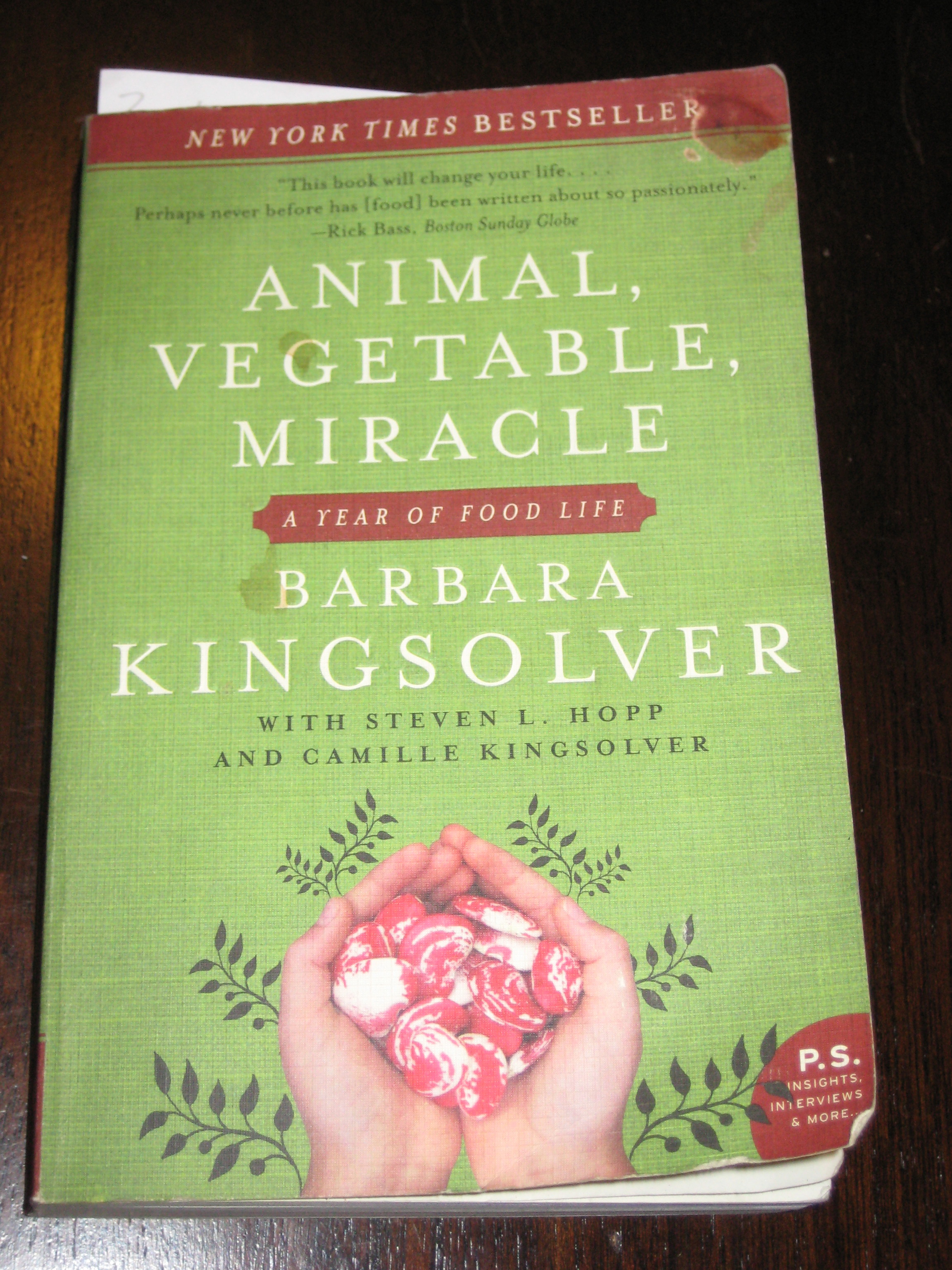
Love for “Animal, Vegetable, Miracle”

My copy. Note the food stains on the cover.

I’ve owned a copy of Animal, Vegetable, Miracle for over a year. Barbara Kingsolver has been one of my favorite authors ever since I read the The Bean Trees in high school. I think that she’s a phenomenal writer, and I’ve been a fan of her focus on environmental preservation for a long time. So you’d  think, especially as a whole-foods freak, that I’d have been totally stoked to read about her year of eating only local and homegrown foods book. I was stoked when I bought it, but then I had a few false starts. I just couldn’t get into it.

At first I thought that it was boredom. A lot of the facts and opinions that Kingsolver &  family present are the same as those presented in other books I’ve read, such as Omnivore’s Dilemma, In Defense of Food, and Plenty. But, considering that the book is still slightly different, and entertaining due to Kingsolver’s wit, boredom didn’t seem to be enough of an answer. After struggling to get into the book for several month; the answer dawned on me. I was jealous! Basically, Kingsolver is living MY ideal life! She’s a highly successful professional writer, she has what seems like a great family, and she is living my rural dream: growing her own food, having time to cook, and having peace and quiet and nature all around her.

Once I realized that I was just jealous, I was able to get over it and enjoy the book, wherein Kingsolver and her family move away from Arizona and on to their family farm in Virginia. They commit to a full year of eating foods that they have either grown themselves or sourced locally. The book is full of gardening, cooking, and animal-raising anecdotes  from Kingsolver, as well as recipes and essays on their experience from her 18-year-old daughter, Camille, and more scientific essays on the global impacts of the standard  American diet from her husband, Steven Hopp.

True to form, Kingsolver’s writing style is wonderful. She is descriptive, yet still conversational. Her passion for delicious food is contagious. Unlike Plenty, this book has nothing to do with deprivation. It is all about how much more flavor and abundance one’s life can have by eating food that is grown close to home. It’s not just about tastes, it’s also about living in the moment and taking full pleasure in what nature has to offer. It is an absolutely compelling argument (for pretty much anything) to explain all the ways in which a person’s experience of life will be better if they choose a particular lifestyle. Kingsolver is able to advocate local eating by example and without proselytizing.

Despite my desire to run away to my family’s farm and live precisely as Kingsolver does, I understand that I must remain reasonable. I don’t have the money or the writing career to support running away from the city just yet. I have some work to do. However, I am inspired anew to put the effort into planning for what I can do starting in the spring. I already make every effort to purchase local meat, eggs and dairy. Local produce is nearly impossible to buy during a Minnesota winter! But, now I have a year of gardening and lessons learned behind me, so I think I should be able to plant a successful garden next year. I can also plan better for possible canning when I shop at the farmer’s market. I feel ready to take the next steps, and am already getting excited to do it!

Unpasteurized and Unashamed

So, I had my little outburst this morning regarding the raw milk story in the Star Trib. I’m cooled off now. Also, it is 11:15 on a Thursday night before I’m supposed to be going out of town for 4 days. I still have more packing to do. I don’t have time to write a well-researched, well-thought response. I guess that what it comes down to is that people either think and research for themselves, or they take everything that they hear from the government and the media at face value. In general, people are going to believe whatever it is easiest for them to believe.

The current outbreak story is not going to make one damn bit of difference to the opinions of anyone who currently drinks raw milk. It might make people more careful about which farmers they will buy from. Most people who drink raw milk do it because they have researched it and have good reason to believe that it is a good choice for them.

I just want to make a few general comments, just to get them off my chest:

  • After the last highly publicized outbreak of E.Coli spinach, nobody pronounced spinach “unhealthy” – this might be a clue that this issue is majorly politicized and it’s hard to get any kind of straight answers.
  • Don’t fool yourself into thinking that pasteurized milk is necessarily “clean”  or healthy. People didn’t pasteurize milk until they started industrially farming cows (I bet your great-grandparents didn’t drink pasteurized milk – and they were obviously fine, right?). They didn’t have to because the animals themselves weren’t overcrowded and in unsanitary and unnatural conditions (re: the farm in the Star Trib had already been cited for poor sanitation).  If you think that the idea of fresh milk is disgusting, visit the average industrial dairy farm. Just because all the shit those poor animals have ingested and lived in is “dead” doesn’t mean it’s not still there.
  • Finally, in any and all cases, please think for yourself. I really don’t think that anything can be taken at face value in this debate (like so many others).  Whatever FDA-approved “food” that you find wrapped in plastic at your local grocery warehouse isn’t necessarily the best choice. Fine, there might be some risk involved in eating some raw foods. But a lifetime of eating industrial food poses definite dangers as well.

Raw Milk Awesomeness

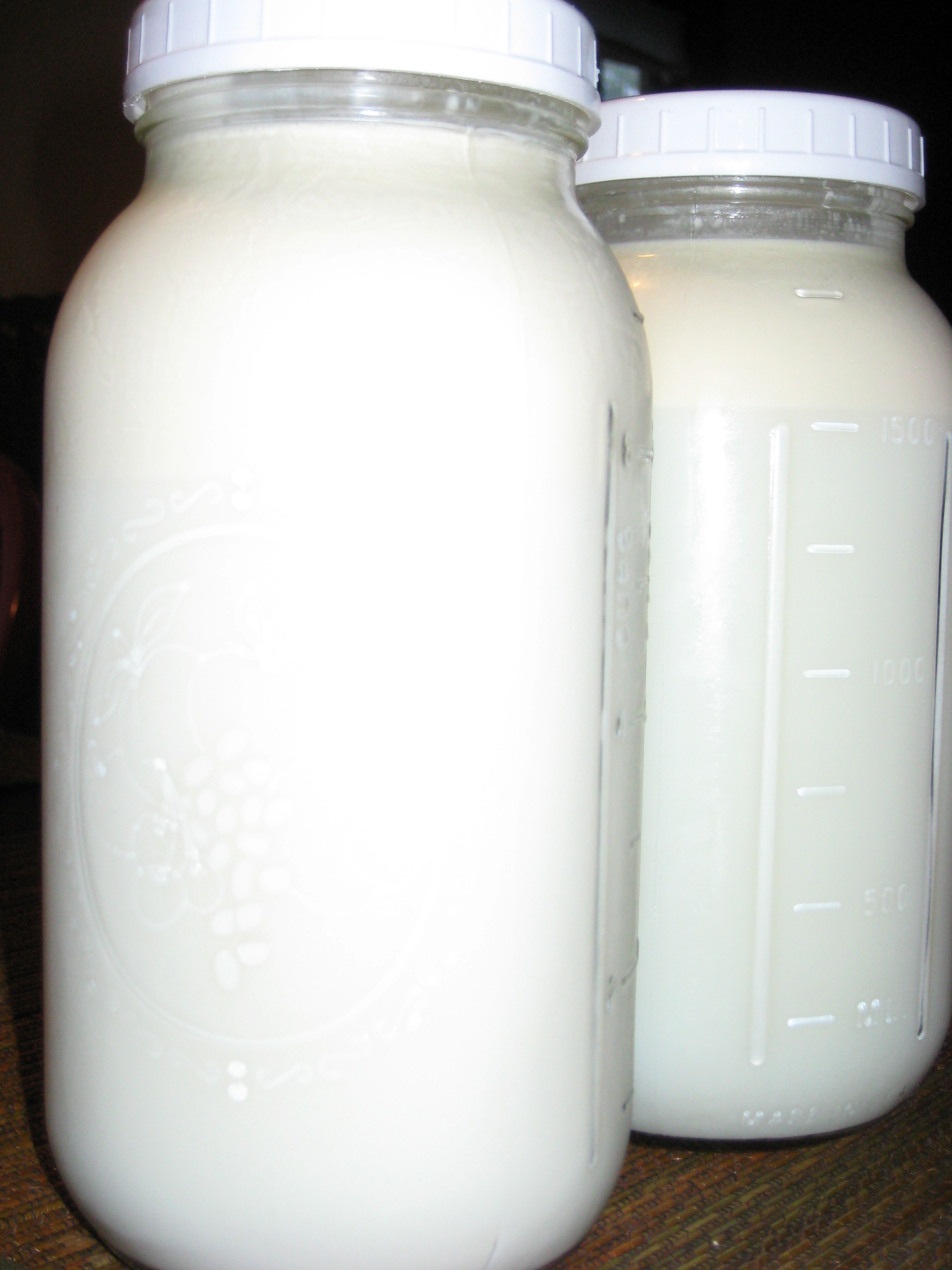
Dave and I have been getting some raw milk. Direct from farm, of course. It is illegal for farmers to sell raw milk off of the farm that produced it. It is also illegal to advertise it, so I think I have to be careful here. Can just writing about it on a blog constitute advertisement? I don’t know.  I might seem paranoid, but you’d be surprised by the swiftness, and harshness, of prosecution if rules regarding raw milk aren’t closely followed. I’m not going to go into the trials and tribulations of the real dairy farmer right now, since it’s a topic that I am still researching. What I am going to do is write a little about how much raw milk rocks.

I am tempted to go into why dairy is actually good for us, overall. However, I am still learning about that, too. So, for now I’ll leave it to a simple comparison of pasteurized and raw dairy; since we obviously consume a ton of dairy in the U.S.. First, a lot of people who think that they are lactose intolerant are actually only intolerant of pasteurized milk. This is because the pasteurization process kills the enzymes that exist in milk that our bodies can use to help process it. People have varying levels of enzymes already in their guts (based on genetic predisposition). True lactose intolerance is the inability to produce the enzyme lactase . This is common in cultures that did not descend from dairy consumers (duh – makes perfect sense, doesn’t it?). People of northern European descent are more likely to produce lactase beyond childhood (everyone produces it as babies, since we need it to digest our own mothers’ breast milk) than those of southern European, African, or Asian descent.  A lot of people who do produce lactase  just don’t produce enough to handle pasteurized milk because it makes the body work so hard to digest it. Or, a lot of people that think that they are lactose intolerant are actually allergic to milk because of the difficulty of digesting pasteurized product. I’m an example of this myself – pasteurized milk causes stomach and sinus problems for me. Raw milk does not. We’ve tried this out on a couple “lactose intolerant” friends, neither of whom reported any problems.

The second awesome thing about raw milk is how quickly the body absorbs the nutrients in it. It is insane. Dave and I joke about how it’s an elixir. But it’s really no joke. I tend to be calcium deficient, which can lead to muscle spasms as well as cramping. When we first started buying raw milk, I could drink a glass of raw milk when these symptoms set in, and they would literally go away within minutes. It is insane! Since I’ve been drinking it regularly, my problems have disappeared. I don’t take a calcium supplement, either. Pasteurization makes it harder for the body to absorb nutrients from the milk (again, because the heating process basically kills it; kind of like putting vegetables in the microwave kills a lot of the vitamins in them).

The third awesome thing is that, unless they are extremely ethically challenged, raw dairy farmers follow very stringent guidelines on the living conditions of their animals. The cows and their living environments need to be extremely clean and drug-free to guarantee the safety of the product without heating it. Furthermore, most farmers that care enough  not to take nutrients out of the milk, also care enough about the nutrients that are going into the milk. This  means that the cows are commonly pastured for as long as they can be, and are fed organic straw in the winter. The cows that my milk comes from are treated like pets. They have names. They are handled gently. And when new calves are born the farmer sends out birth announcements like a proud mama! It feels good to be guaranteed cruelty-free product.

Finally, it’s just delicious. Plain and simple. Which is why people have such a hard time giving up dairy (ahem, for those of us that have tried to be vegan!) in the first place!= )

The Old American Dream

Related to last Thursday’s post, I am aware of the source of some of the anxiety that I’ve been having about this move. It is rooted in choosing to live in a way that is different from the way that I was raised to live. I was raised in the suburbs. I have one brother. My parents worked opposite shifts so we never had to go to daycare. We certainly didn’t have a lot of money as a family unit, but I always had my own bedroom, even when we lived in a trailer. We went to Catholic grade school. We went on annual vacations (even if it was just camping most of the time!). We had plenty of toys. Plenty of stuff. We had very little awareness of what a struggle it was for our parents to provide all of this to us. In our minds we weren’t spoiled. We were just “normal.” Now I look back at what my parents sacrificed for us (They never had new clothes. They always drove crappy cars. They never got to get away alone together. Etc.), with a mixture of awe, gratitude, and horror.

At the time, mom and dad were just doing what they felt they were supposed to do. Get married. Have kids. Buy a house. Accumulate stuff; mainly for the benefit of their children. They were raised under the idea that their role as parents was to provide a better life for their children than the one they had themselves (even if it meant going into debt to do it). The American Dream. I still think that this ideal rings true; I think that most young parents still want to create the best life possible for their children. I hope so, anyhow! I just think that “a better life” is in the process of being redefined. The idea of “the good life” in American culture is very stuff-centric. There are prescribed steps that, when followed, are supposed to lead to success. Success is a nicely decorated house on a big lot, with lots of fancy appliances and electronics, new cars every couple of years, vacations, etc. In my parents’ generation, and for a couple generations before and after theirs, everyone strove for an approximation of this image of success.

My generation may have been the last where the majority of us were raised in some approximation of the American Dream. The middle class. We were raised to believe that the culture of stuff is normal, and even necessary. Now the middle class is disappearing. There are the rich (we’re talking Oprah and the like, here), the wealthy (aka, anyone that can afford to live the way that my generation was raised to live), the poor (what used to be blue-collar middle class), and the very poor (those that can barely afford, or can’t afford, basic needs like food, shelter, etc.). My friends and I represent the new middle class. Educated, but without any of the money or stuff that has historically been associated with being educated. We simply can’t afford it – our incomes are not commensurate with our education, or with the amount of educational debt we carry.

Roughly 90% of people I know in my age group (I’m thinking of a group of about 100 friends and acquaintances) went to college. A good chunk have advanced degrees as well. The majority of us are married or permanently coupled. At age 30-35, only around 5% own their own homes. Almost everyone I know still rents. We all buy our clothes at discount stores. Some of us have some fancy electronics, etc., but they are in apartments or very modest homes. Many of us are thinking about starting families, but are worried that we can’t afford it, particularly when we are so mired down with student loans, and aren’t yet making enough money to comfortably pay on them, live life, and support children. For us, the old American Dream just simply isn’t really available.

What I think, what I hope, is happening, is that many people, particularly in my generation, are readjusting their ideals for “the good life” to look a little less like their parents’ ideals, and a little more like their grandparents,’ or great-grandparents’ ideals. To be happy, we don’t need a lot of stuff. We can’t require a lot of stuff for happiness, or happiness would literally be impossible. We can still have families. We can still experience life. We just can’t do those things AND own a lot of crap. For many of us, it has to be a choice. I think that for those of us that are on the cusp of this change in ideals, the transition can be emotionally difficult. It has been for me, anyhow. It is difficult to be raised in one value system and to then adjust to another value system. Pieces of the old value system still come back to haunt you, as unreasonable as they may be. My old value system comes back and whispers in my ear that, even though I make a relatively decent living and don’t hate my job, I’m not as successful as I should be.

The reality is that I simply can’t afford to live the same way that my parents did, and neither can most of my peers, despite the fact that I took full advantage of all of the opportunities that they gave me; I took all the right steps. That reality feels a little bit backwards, and my emotions rebel against it (as do those of my parents). But the truth is that I know that the way that my parents ‘ generation, and the generations around theirs, lived has caused massive destruction on this planet, and in the health and well-being of billions of humans. I don’t really even want to live that way. The simple truth is: of course I can live in a small space and still raise a child well. Of course I can be happy and experience life in that same small space. Of course I can get by with fewer outfits. Of course I don’t need every updated gadget that appears on the market. Of course I don’t need to buy my children gobs of toys. Of course I don’t need to eat out all the time. And so on, and so on, and so on. My grandmother did it. Her mother did it. Everyone turned out just fine. Everyone turning out fine and happy is the true mark of success. Not stuff. My family and I will be just fine, too.

Food Philosophy Vs. Practice

In this post I wrote about how eating healthy is not that complicated. The overall point being that if a person eats actual food, and doesn’t eat an enormous amount of it, it’s pretty likely that he or she will be healthy. I am insanely tired of my own diet/food schizophrenia. I’m tired of thinking so hard about what I should or shouldn’t eat. I’m tired of all that thought being in vain when it becomes clear that whatever diet I’m on isn’t working, or when it conflicts with whatever the most recent nutritional science says. I’m tired of constantly starting new food routines. I just want to eat and be nourished and healthy. Period. Therefore, as part of my resolution to treat my body more respectfully, I intend to actually adopt the logical philosophy of Michael Pollan, “eat food, not too much, mostly plants.”

I sincerely hope that this will be my final change in food routine. Ever. This final change-up entails the following:

  1. More shopping and more cooking. I will be looking for the most “whole” food possible. If sustainably farmed animal products are not available, or if I don’t know where they came from, I will not be eating them. In that sense, I guess that I will still be primarily vegan (since good stuff is hard to find!). But, since I will eat any animal products under the right circumstances, I will not call myself vegan or vegetarian. I heard a new term last week that probably describes my eating habits better: “flexitarian.” Or, perhaps I just won’t term myself anything but “eater”! Anyhoo, veggies and grains will be organic and as local as possible (acknowledging, of course, that it is the dead of winter in MN right now!). As little as possible will be processed. If I want a particular dish, I’m going to try to make it entirely from scratch (it’s an adventure!).
  2. 3 squares per day, nothing between. I want to eat well-rounded meals 3 times/day, not in front of the T.V., ideally in the company of at least one other person. Acknowledging that breakfast and lunch will still most likely be consumed while sitting at my desk (I would still rather be able to go home earlier each day than take a break to eat!).

So, really, those 2 things – eat food, not too much – are kind of a lot of work in the context of the current American societal structure. When I said that eating healthy isn’t complicated, what I really meant is that it is not difficult to comprehend logically. I didn’t mean that it is easy in practice! I am personally curious about how much time this will take each week; how much work will it actually be? Also, is all the work really worth it? Therefore, I am going to add a new weekly feature to this blog. I’m going to call it “Weekly ‘Eat Food’ Wrap-up.” Here is what I plan to include in the feature:

  1. What I ate over the last week.
  2. How many hours I spent shopping.
  3. How many hours I spent cooking.
  4. Times that I went off the plan (used stuff that doesn’t technically fit).
  5. Results: Weight loss (I will also note how much I exercised as an added barometer for this), noticeable health improvements, any stuff I learn in the process about new sustainable products/where to buy them, etc.

I’m not saying that I plan to be “perfect”. In fact, I will straight up say that when it comes to eating with others at restaurants or in their homes, I will eat whatever’s put in front of me (minus the meat, in most cases) without complaint. I’m a pretty average girl, and I want to see how this goes for the average person. I know that this is kind of an exhibitionist thing to do, but I feel like it will add some motivation for me to keep on track with stated values, and it might help others who are curious about how hard it is to do this and are trying to decide whether or not it’s worth it!Anyhow, I’m going to try it and see how it goes.

What do you think?

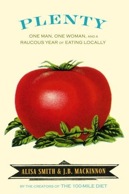
“Plenty”: Good Writers Writing About Things That Matter

plenty

I finished reading Plenty:One man, One Woman, and a Raucous Year of Eating Locally on Saturday. You may have heard of “the 100-mile diet.” Well, authors Alisa Smith and J.B. MacKinnon played a huge role in  popularizing this way of local eating. The book covers the couple’s one year commitment to only eat foods that were sourced from within 100 miles of their Vancouver home, their purpose being to reduce the negative environmental impact created from shipping food across thousands of miles. The point is that a lot of fossil fuel is burned unnecessarily while bringing food from across the country, or across the planet, when most of us can live just fine on food found near our homes. Not to mention that we might actually know exactly what we’re eating, since eating locally doesn’t include eating anything processed (most processed food is made from ingredients that were sourced from god-knows-where)!

It was interesting to me to read about the trials and tribulations of Alisa and James as they scrabbled together a healthy diet in the cool and rainy pacific northwest. It made me feel grateful that, if I ever do decide to start the 100-mile diet, I live in central Minnesota. It seems like there are not a whole lot of food staples that don’t grow within 100 miles of Minneapolis; notably, we have a lot of grains here, which was a problem for Alisa and James. Though this was interesting, what really fascinated me about this book was the thoughtfulness and the skill with which the authors lay down the story of their year.

The chapters of the book are each named for a month, and Alisa and James (I know that it is not proper journalistic method to refer to authors by their first names, but I’m a blogger, not a journalist, and I almost feel like I know them after reading this book!) take turns writing about each month. Each chapter is preceded by a recipe and a pertinent quote.  Both of the authors are professional journalists, so they know how to write in a way that is technically excellent. Being a description of a particular experiment, the book could have been a lot more dry than it was – trust me, I’ve read many a dry non-fiction. However, Plenty is filled with personal stories from the lives of James and Alissa. The stories and observations of the couple dovetail beautifully with the nuts and bolts of the diet to create a picture of how emotionally and spiritually connected humanity is with what we eat; and how far we have strayed from that connection. The trials and tribulations are interesting and, at times, instructive, but it is the amount of imagery and emotion in the book that makes it a pleasure to read.

November in Minnesota doesn’t seem like the right time to completely dive in to a local foods lifestyle, but someday I hope to live this way, and I’m taking baby steps all the time. It will be extra challenging with my allergy-induced diet restrictions! In the meantime, Plenty is an inspiration for anyone that wants to feel closer to the earth, and to gain a better sense of how lucky we all are to be here.

Personal Care Products or Pretty Poisons?

Recently I have been reading Big Green Purse by Diane MacEachern. It’s a book of advice on environmental advocacy via responsible consumerism. I didn’t read it cover to cover because a lot of the information in it is kind of second nature to me (and I hope most people!) at this point. For example: biking as opposed to purchasing fossil fuel (duh). One of the striking chapters for me was the one about personal care products. I guess that I was aware, on an intuitive level, that many personal care products are not good for the environment (or our bodies) because they often come in un-recycleable or unnecessary packaging, and contain chemical ingredients that are toxic in some way. However, I never really got into the specifics of what the toxins in so many of our personal care products actually do. I found this user-friendly list of common toxins in personal care products on Green-blog.org. It is pretty comparable to the list found in Big Green Purse. Once you get down to the nitty-gritty of what these toxins do to us (and to the animals and plant life that are affected by run-off from our showers), it’s pretty horrifying that manufacturers are allowed to use these ingredients at all.

MacEachern indicates in her book that there is very little government regulation over the ingredients in personal care products. To find out more, I checked out the U.S. Food and Drug Administration (FDA) website and found these clif notes to FDA Authority Over Cosmetics (the inclusion of other personal care products is implied). Basically, the FDA says that manufacturers are responsible for guaranteeing the safety of their own product and for providing consumers with a list of ingredients. The implication is that if consumers don’t want to absorb harmful toxins into their skin, they have to do their homework. Obviously manufacturers are typically more concerned with their bottom line than they are with the well-being of their consumers; therefore they are going to keep their definitions of “safety” pretty loose, and are going to make their labels as indecipherable as possible.

I am a general advocate of personal responsibility. I think that people should have the right, and the responsibility, to choose how to live their lives. I’m not big on government regulation. However, I think that if that’s the way we’re going to play it in this country, then there needs to be some guidelines around transparency. If we’re going to allow people to choose whether or not they would like to risk cancer to keep their skin smooth, there should be warning labels attached to these products that let people know the risks. It shouldn’t be so difficult to figure out what is or isn’t “safe.” This is the whole argument surrounding the warnings attached to packs of cigarettes. Why isn’t this extended to other arenas? Because most people probably won’t relate their breast cancer back to their deodorant?

The issue of financial ability to buy safer products could begin to be addressed by warning labels, too. If people know that a product is bad for them, and why, they are less likely to buy it, and more likely to spend their money on a safer alternative. The more people spend money on safe products, the more the price is going to drop until it’s affordable enough for everyone. Until there are better regulations on personal care products, there are organizations like the Environmental Working Group (EWG) that are working to bring easy access to information to the masses. I highly recommend checking out their website!

Anyhow, before I get all foaming-at-the-mouth-ranty; I did what MacEachern suggested and took inventory of the products that I use. Her suggestion was to either cut your total number of products used by three, or decrease the number of days each week that you use all of your personal care products. By not using as many products, or by not using them as much, you can then afford to start replacing the products that you do use with safer, toxin-free products. Here’s all the products I currently use each day. Next to each one is a toxicity rating from the EWG (go here for a quick and easy toxicity rating for the products you use, plus suggestions for safer ones!):

Toxicity Rating Scale: 0-2 Low Hazard, 3-6 Moderate Hazard, 7-10 High Hazard

  1. Herbal Essences Shampoo for Wavy and Curly Hair –5
  2. Herbal Essences Conditioner for Wavy and Curly Hair – 5
  3. Dove Soap – 3
  4. Tom’s of Maine Apricot Deodorant – 4 This one surprised me. It must have something to do with the fragrance, since the unscented formula is only a 2.
  5. Sensodyne Toothpaste – 4
  6. Aveeno Naturals Radiance Face Lotion – 6
  7. Covergirl Smoothers Concealer – 2
  8. L’oreal Perfect Match Foundation – 5
  9. Rimmel Translucent Powder – not in the database
  10. Covergirl Blush – 9
  11. Maybelline Stilletto Mascara – 6
  12. Burt’s Bees Lip balm – 2
  13. Burts Bees Face Wash – 2
  14. Coppertone Sport Sunscreen 70+ – 4

The first thing I noticed is that I am kind of surprised by the overall number of products I use. I generally consider myself pretty low-maintenance. I don’t use hair products or a million different facial products. I don’t use a lot of make-up. But 14 items still feels pretty big. I don’t really see myself cutting down on the number right now, but I will cut down on the number of times I use each product each week (with the exceptions of soap, deodorant, and toothpaste – those have daily significance!).

I am actually somewhat surprised by how few of the cheap-o products I use are really bad. I wish that I was surprised that one of the higher numbers on my list, Aveeno face lotion, is greenwashed to make it seem better for you than it really is (the addition of  some natural ingredients justifies them calling their mostly-chemical lotion “natural”) . As a result of this inventory, I will be getting rid of that Covergirl blush immediately. I will be working on finding replacements for the Shampoo and Conditioner first, as those are things that are rinsed down the drain and more immediately affect the environment. Then comes the face lotion and the mascara. Etc.

It could be a learning curve to replace my toxic products with safer, more enviro-friendly products.  Though they are really bad for us and the environment, I can’t deny the power of parabens.  When I happen upon a good replacement product, I’ll post it here! In the mean time, I leave you with 3 questions: 1. How many products do you use each day? 2. What are your favorite low-toxin products, and why? 3. How do you think toxins in personal products should be regulated, and why? Please share your thoughts!